In this guide (10 sections)
- Our top picks
- Best Monopods With Feet for Wildlife: Quick Picks
- Monopods With Feet Compared: Height, Load and Weight
- How We Picked These Footed Monopods
- The Best Monopod With Feet for Wildlife Photography, Reviewed
- Can a Monopod With Feet Stand on Its Own?
- How to Choose a Monopod With Feet for a Telephoto Lens
- Monopod or Tripod for Wildlife?
- Our Verdict
- Questions photographers ask
We earn a commission if you buy through links on this page, at no extra cost to you. It never changes what we recommend. How we make money.
How we picked these
- Review themes from 7 verified-buyer and owner reviews on retailer sites, so every pick shows what buyers praise and complain about.
- 17 owner posts, user discussions and expert reviews read across 5 sources.
- Every spec checked against 10 maker and retailer pages.
- We did not test these products ourselves, and we say so. All sources are linked at the end of this guide.
Our top picks
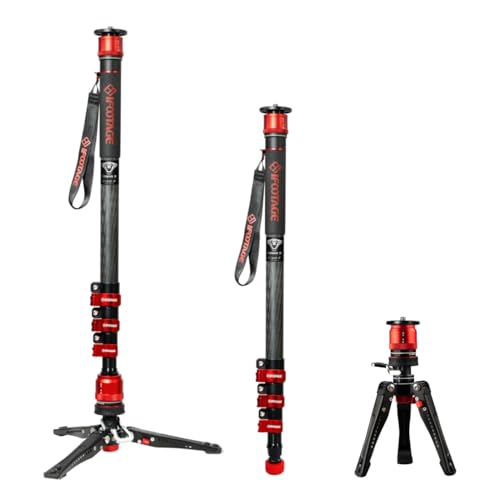 Best overall for long lenses · 3.7/5IFOOTAGE Cobra 3 C180F-P Carbon Fiber Camera Monopod
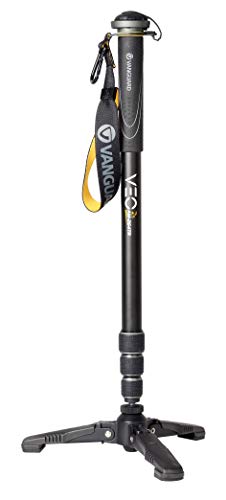 Best fold-out tri-feet · 3.5/5Vanguard VEO 2S AM-264TR Monopod
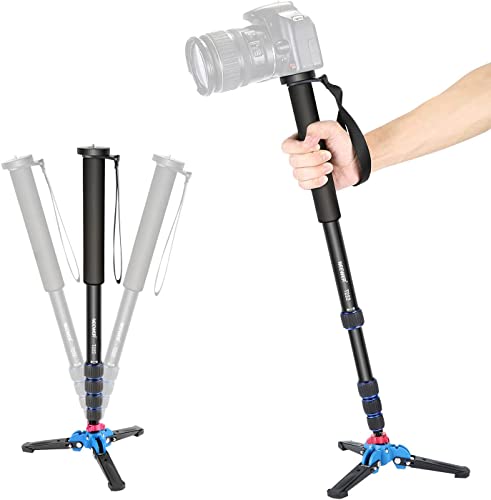 Best budget · 3.3/5NEEWER T222 Extendable Camera Monopod with Stand Base
The short answer
- The IFOOTAGE Cobra 3 C180F-P is our pick for most wildlife shooters: carbon fiber, 17.6 lb (8 kg) rated load, 71 in maximum height and pedal-lock feet.
- The Vanguard VEO 2S AM-264TR folds to 21.5 in with fixed fold-out tri-feet, but US retailers list a 13.2 lb load and Amazon US shows it temporarily out of stock.
- The NEEWER T222 is the light budget option at 1.3 lb with a detachable stand base, best kept to lenses well under its 11 lb rating.
- Feet let a monopod stand for a moment and steady the base, but none of these is safe to leave unattended with a long lens on top.
A monopod with feet is the quickest steady support you can carry on a wildlife walk: one leg takes the weight of a long lens, and a small three-foot base lets it stand for a moment while you raise binoculars or swap a battery. We compared the footed monopods that the top-ranking wildlife and monopod guides recommend, checked every spec against the maker or retailer page, and read owner reports. Only three passed our rules (recommended by at least two of those guides and listed on Amazon US): the IFOOTAGE Cobra 3 C180F-P for most long-lens shooters, the Vanguard VEO 2S AM-264TR for always-attached tri-feet, and the NEEWER T222 on a tight budget. We have not used these monopods ourselves; this guide is built from manufacturer specs and owner reports.
Best Monopods With Feet for Wildlife: Quick Picks
For most wildlife photographers, the best monopod with feet is the IFOOTAGE Cobra 3 C180F-P, because it carries the most weight and its feet lock. The other two trade load capacity for a shorter folded length or a lighter pack.

Here is how the three footed monopods split:
- Best overall for long lenses: IFOOTAGE Cobra 3 C180F-P. Carbon fiber, a 17.6 lb (8 kg) rated load, 71 in of height and a pedal-lock base.
- Best fold-out tri-feet: Vanguard VEO 2S AM-264TR. Feet are always attached and fold up; the leg packs to 21.5 in.
- Best budget: NEEWER T222. Just 1.3 lb with a detachable stand base, for lighter telephoto kits.
Monopods With Feet Compared: Height, Load and Weight
A wildlife monopod with feet should out-carry your lens, reach close to eye level and still pack small enough to walk with all day. Every figure below is the maker’s or retailer’s claim, not a measured value.

This table compares the three monopods on the specs that matter for a telephoto lens:
| Spec | IFOOTAGE Cobra 3 C180F-P | Vanguard VEO 2S AM-264TR | NEEWER T222 |
|---|---|---|---|
| Rated load | 17.6 lb (8 kg) | 13.2 lb (6 kg) per US retailers | 11 lb (5 kg) |
| Max height | 71 in (181 cm) | 64 in (163 cm) | 66 in (168 cm) |
| Folded length | 27.2 in (69 cm) | 21.5 in (55 cm) | 20.5 in (52 cm) |
| Weight | 2.8 lb (1.27 kg) | 2.0 lb (890 g) | 1.3 lb (0.6 kg) |
| Sections and locks | 4, flip locks | 4, half-turn twist locks | 5, lock type not stated |
| Material | Carbon fiber | Aluminum, 26mm | Aluminum alloy |
| Feet | Pedal-lock base, detachable | Fixed fold-out tri-feet | Detachable three-leg base |
How We Picked These Footed Monopods
We started from the pages that rank for this search and kept only footed monopods that at least two of them recommend. That list included Digital Camera World, Shotkit, The Adventure Junkies, Neewer’s own wildlife guide and several affiliate roundups, plus Reddit and forum threads for owner evidence.

Then we checked each model against the maker’s spec page and its Amazon US listing, and dropped anything we could not buy as one clear listing. Owner research is uneven: we read eight owner posts on the Cobra 3 but only four or five on the other two, so treat their praise and complaints as early signals. Scores follow our how we score rubric.
From our notes: When we tallied which footed monopods the top wildlife guides named, two strong candidates fell out at the last step. Neewer’s GM76, recommended by three of the pages, now shows as unavailable on Amazon US, and Vanguard’s carbon VEO 2S CM-264TR, Digital Camera World’s pick for feet, has no US listing of its own. That is why this list stops at three, and why the Vanguard here is the aluminum AM-264TR, which Shotkit recommends and Amazon US lists as temporarily out of stock.
The Best Monopod With Feet for Wildlife Photography, Reviewed
Each footed monopod below suits a different lens and walking style, so match it to your heaviest telephoto first. The pros and cons lists sit beside each review; the text adds the context.

IFOOTAGE Cobra 3 C180F-P Carbon Fiber Camera Monopod: best overall for long lenses
3.7Best Tripod Spec Score out of 5
- Stability8/10
- Portability (weight and folded length)6/10
- Working height8/10
- Build (materials, leg locks, head)8/10
- Value7/10
High rated load, carbon leg and a lockable footed base make it the most stable pick, but it is the longest and heaviest of the three when packed.
What we like
- Highest rated load here: 17.6 lb (8 kg)
- Pedal lock frees or locks the leg's tilt over the feet, per iFootage
- Carbon fiber leg with flip locks, about 2.8 lb (1.27 kg)
What we don't like
- Long when folded: about 27 in (69 cm), so it rides outside most daypacks
- Owners on BCG Forums say the feet pick up dirt, and one found it wobbly with an 800mm lens
What owners and reviewers say from 8 reviews and posts we read
Praised for
- Folding feet and one-touch pedal take the lens weight off arms and back
- Quick-release couplings between leg and base
- Works well with zooms and a 600mm prime under a tilt head
Common complaints
- Feet collect dirt and debris
- One owner found it too unstable with an 800mm lens and a Wimberley head
- One owner felt it was long and less sturdy than expected
Read on: BCG Forums: iFootage Cobra 3 monopod thread (page 1) · BCG Forums: iFootage Cobra 3 monopod thread (page 3)
Who it's for: Wildlife and birding shooters carrying a 100-400mm or 150-600mm class zoom who want the monopod to stand for a moment between shots; one forum owner found it too unstable under an 800mm prime.
With a 17.6 lb (8 kg) rated load, the Cobra 3 C180F-P leaves the most headroom of any pick here for a 150-600mm class zoom and a body. Its carbon fiber leg extends to 71 in (181 cm) on four flip-lock sections and weighs about 2.8 lb, per iFootage. The base is the clever part: three feet with a pedal lock that, according to iFootage, gives 40 degrees of tilt and 360 degrees of rotation, then re-centers and locks with a press. A one-click quick release lets you pull the leg off the base.
Owners on BCG Forums like that the feet and pedal take the weight off their arms and back, and several run it with a tilt head under zooms or a 600mm prime. The recurring gripe is that the feet collect dirt. One owner with an 800mm lens and a Wimberley head found it too unstable and had to stand on the feet. At 27.2 in folded, this carbon fiber monopod with feet rides on the outside of most daypacks.
Vanguard VEO 2S AM-264TR Monopod: best fold-out tri-feet
3.5Best Tripod Spec Score out of 5
- Stability6/10
- Portability (weight and folded length)8/10
- Working height7/10
- Build (materials, leg locks, head)7/10
- Value7/10
Compact and quick to deploy with fixed feet, but the 13.2 lb rating and stiff panning reported on the feet limit it with big lenses.
What we like
- Shortest folded length here: 21.5 in (55 cm)
- Tri-feet are attached and fold up, so there is nothing to forget
- Half-turn twist locks on 4 sections, about 2.0 lb (890 g)
What we don't like
- Digital Camera World found the tri-feet make panning stiff on the carbon version
- Adorama reviewers describe the feet as plastic and a bit awkward when folded
What owners and reviewers say review themes from 3 owner reviews, plus 5 posts and reviews we read
Praised for
- Tri-feet add stability with a small footprint
- Good value for a footed monopod
- Light enough to replace a tripod on hikes
Common complaints
- Feet are plastic and need gentle handling
- Feet stick out a little when folded
- One owner of the carbon kit found the head rough past 60 degrees of tilt
Read on: Adorama: Vanguard VEO 2S AM-264TR listing and owner reviews · Vanguard UK: VEO 2S CM-264TBP120T owner reviews (carbon sibling) (3 reviews)
Who it's for: Walk-and-shoot birders with a mirrorless body and a mid-size telephoto who want feet that are always there; keep the full rig under 13.2 lb, and note Amazon US shows it temporarily out of stock.
Feet that never come off are the point of the VEO 2S AM-264TR. Its tri-feet are fixed to the bottom of a 26mm, four-section aluminum leg, fold up flat for walking, and sit below a ball joint that Vanguard says lets you pan and adjust the angle. It folds to 21.5 in (55 cm), extends to 64 in (163 cm) and weighs 2.0 lb (890 g), per Vanguard, so it is the easiest of the three to strap to a pack. Half-turn twist locks and a smartphone holder with Bluetooth remote round out the kit.
Amazon and Adorama list a 13.2 lb (6 kg) load while Vanguard UK lists 33 lb (15 kg); we plan around the lower figure, so it suits a mirrorless body with a 100-400mm better than a heavy 600mm. Digital Camera World’s review of the carbon CM-264TR sibling found the tri-feet make panning stiff, and Adorama reviewers describe the feet as plastic and a little awkward when folded. Amazon US shows this listing as temporarily out of stock, so check availability before you plan a trip around it.
NEEWER T222 Extendable Camera Monopod with Stand Base: best budget
3.3Best Tripod Spec Score out of 5
- Stability5/10
- Portability (weight and folded length)8/10
- Working height7/10
- Build (materials, leg locks, head)5/10
- Value9/10
Very light and low cost with a removable base, but the 11 lb rating and thin five-section leg suit light telephotos only.
What we like
- Lightest here at 1.3 lb (0.6 kg)
- Base detaches, so it doubles as a plain walking-stick monopod
- 1/4 in top screw and 3/8 in bottom thread
What we don't like
- 11 lb (5 kg) rated load is the lowest of the three
- One owner on Neewer's store found it less stable than hoped
What owners and reviewers say review themes from 4 owner reviews, plus 4 posts and reviews we read
Praised for
- Handy feet for stabilizing between shots
- Saves setting up a full tripod in the field
- Good for small cameras and lenses at a low cost
Common complaints
- Not as stable as one owner hoped
Read on: Neewer: T222 Extendable Monopod and Stand Base owner reviews (4 reviews)
Who it's for: Beginners and hikers with a crop or mirrorless body and a 70-300mm class lens who want a light footed monopod; stay well under the 11 lb rating with long telephotos.
The lightest pick by far, the NEEWER T222 weighs 1.3 lb (0.6 kg) and folds to 20.5 in (52 cm). Its five aluminum sections reach 66 in (168 cm), and a detachable three-leg stand base tilts 15 degrees while the leg rotates 360 degrees on it, per Neewer. Pull the base off and you have a plain monopod with a 3/8 in bottom thread; the top takes a standard 1/4 in screw.
That light build is also the limit. Neewer rates it for 11 lb (5 kg), the lowest here, and a thin top section is not where we would hang a big zoom. Owners on Neewer’s store call the feet handy for stabilizing and like skipping a full tripod setup, while one found it less stable than hoped. We see this budget monopod with a tripod base as a fit for a 70-300mm class lens on a crop or mirrorless body.
Can a Monopod With Feet Stand on Its Own?
A monopod with feet can stand on its own briefly, but it is not a tripod and should never be left alone with a long lens on top. The base is only a few inches across, so a gust, a bump or a heavy lens leaning off-center can tip it.
Vanguard says plainly that monopods with tri-feet are not designed to be left unattended with a camera attached. We treat the feet as a third hand: they hold the rig upright for the seconds it takes to lift binoculars, and they steady the base on rock or mud while you keep a hand on the lens. If you need hands-free waiting, a tripod is the right tool.
How to Choose a Monopod With Feet for a Telephoto Lens
Pick a footed monopod whose load capacity clears your heaviest lens and body by a wide margin, then check height, feet style and head. These are the checks we would run, in order.
- Load capacity vs your lens. Sony lists its FE 200-600mm at 2,115 g (about 4.7 lb) before you add a body and a head. A rated load is the maker’s ceiling, not a comfortable working load, so leave headroom.
- Height and eye level. Add your head’s height to the monopod’s max height and compare it with your eye level. Our guide to how tall a tripod should be for your height shows the math.
- Feet type and panning. Pedal-lock and detachable bases can rotate; fixed tri-feet, per Digital Camera World, can make panning stiff.
- Head choice. A tilt head angles the lens up while the leg stays vertical, a monogimbal tracks birds in flight, and a ball head suits shorter lenses. Our ball head vs pan tilt head comparison explains the trade-offs, and an Arca-Swiss plate keeps lens feet and heads interchangeable.
Monopod or Tripod for Wildlife?
Choose a monopod with feet if you walk and shoot, and a tripod with a gimbal head if you sit and wait. A footed monopod sets up in seconds on a trail, while a tripod holds a heavy lens still in a hide without you touching it.
Many wildlife shooters carry both and pick by the day. If you are tall or want a tripod that also travels, see our tripods for tall photographers over 6 feet, and browse every monopod guide in our monopods category. Before buying any support, our tripod buying checklist covers load, height and plates.
Our Verdict
We would buy the IFOOTAGE Cobra 3 C180F-P for a 150-600mm class lens, the Vanguard VEO 2S AM-264TR for the smallest pack, and the NEEWER T222 for a light kit on a budget. Whichever you choose, keep a hand on the lens, pair it with a tilt head, and never trust the feet to hold a long lens alone.
Questions photographers ask
Is a monopod better than a tripod for wildlife photography?
A monopod is better when you walk and shoot, because it sets up in seconds, fits narrow trails and takes the weight of a long lens off your arms. A tripod with a gimbal head is better when you wait in one spot or a hide for a perched bird, since it holds the lens still without you.
Can a monopod with feet stand on its own?
Yes, for a moment. The feet of the IFOOTAGE Cobra 3, Vanguard VEO 2S and NEEWER T222 let the monopod stand upright while you change a battery or check a frame, but the footprint is small, so Vanguard warns that footed monopods should not be left unattended with a camera on top.
What head should I use on a monopod for wildlife?
Most bird photographers use a tilt head, such as the Manfrotto 234RC that Better With Birds calls the go-to choice, because it angles the lens up and down while the leg stays vertical. A small monogimbal suits fast birds in flight, and a ball head is fine for shorter lenses.
What monopod should I use for a 150-600mm lens?
Choose one rated well above your lens and body together. A 150-600mm or 200-600mm class zoom often weighs over 4 lb on its own (Sony lists its FE 200-600mm at 2,115 g), so the 17.6 lb rated IFOOTAGE Cobra 3 C180F-P leaves the most headroom of our three picks.
Are monopod feet worth it for birding?
For many birders, yes: feet let the monopod stand while you raise binoculars and keep the base from skidding on rock. The trade-off is extra weight, feet that collect dirt, and stiffer panning on some fixed tri-feet designs.
Why you can trust this guide
- Products are checked against manufacturer specifications, user manuals and long-term owner reports.
- Each pick is scored on the Best Tripod Score: stability, portability (weight and folded length), working height, build quality and value. Scores come from published specs and owner reports, not hands-on testing.
- We never accept payment for placement. Affiliate commissions do not affect rankings.
Last reviewed . Read our research process and editorial policy, or report an error.
Sources
- iFootage: Cobra 3 Pedal Version (C180F-P) specifications
- Vanguard UK: VEO 2S AM-264TR monopod
- Adorama: Vanguard VEO 2S AM-264TR
- Digital Camera World: Vanguard VEO 2S CM-264TR review
- Neewer: T222 Extendable Monopod and Stand Base
- B&H: Neewer T222 Extendable Camera Monopod with Stand Base
- Digital Camera World: best monopods
- Shotkit: best monopod for camera owners
- Sony: FE 200-600mm F5.6-6.3 G OSS specifications
- Better With Birds: choosing a tripod or monopod for bird photography
Reviews and discussions we read
- BCG Forums: iFootage Cobra 3 monopod thread (page 1)
- BCG Forums: iFootage Cobra 3 monopod thread (page 3)
- Adorama: Vanguard VEO 2S AM-264TR listing and owner reviews
- Vanguard UK: VEO 2S CM-264TBP120T owner reviews (carbon sibling) (3 reviews)
- Neewer: T222 Extendable Monopod and Stand Base owner reviews (4 reviews)

Best Tripod Editorial Team
Research & editorial
We research tripods, monopods and heads for photographers and video creators: real working height with and without the center column, load capacity against the gear you actually shoot, packed length for a carry-on, leg-lock speed and Arca-Swiss compatibility. Every guide follows our published research process and editorial policy.