
In this guide (11 sections)
- Our top picks
- Monopod vs Tripod for Sports Photography: The Short Answer
- Monopod vs Tripod Side by Side
- Why Sports Photographers Use Monopods
- When a Tripod Beats a Monopod for Sports
- Two Monopods Worth Considering for Sports
- Is a Monopod Steady Enough for Telephoto Lenses?
- Do You Need a Head on a Monopod for Sports?
- How to Shoot Sports With a Monopod
- Final Verdict: Monopod or Tripod for Sports Photography?
- Questions photographers ask
We earn a commission if you buy through links on this page, at no extra cost to you. It never changes what we recommend. How we make money.
How we picked these
- Review themes from 36 verified-buyer and owner reviews on retailer sites, so every pick shows what buyers praise and complain about.
- 6 owner posts, user discussions and expert reviews read across 7 sources.
- Every spec checked against 6 maker and retailer pages.
- We did not test these products ourselves, and we say so. All sources are linked at the end of this guide.
Our top picks
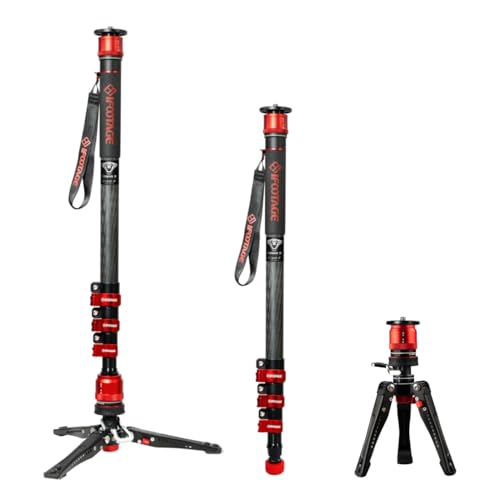 Best for long lenses and video · 3.9/5iFootage Cobra 3 C180F-P
 Best light monopod with feet · 3.7/5Vanguard VEO 2S CM-264TR
The short answer
- For most sports photography, a monopod wins: it carries the lens weight, moves with you down the sideline and fits where tripods aren't allowed.
- A tripod still wins for low light with slow shutter speeds, smooth video pans and fixed or remote camera positions.
- With a 70-200mm and fast shutter speeds, many shooters go handheld; a monopod earns its place with 300mm-plus lenses and long games.
- The iFootage Cobra 3 C180F-P is the tall, pedal-base pick; the Vanguard VEO 2S CM-264TR is lighter and shorter folded, with fold-out tri-feet.
Monopod vs tripod for sports photography is less of a debate than it first looks: on most sidelines, the monopod wins. A monopod is a single telescoping leg that carries your lens weight while you stay free to move; a tripod is a three-leg stand that holds the camera on its own. We spent our research reading sports photographers in forums, maker guides and long-term reviews, and the pattern was clear. Below we give you the short answer, a side-by-side table, two monopods that top pages recommend, and when a tripod still earns a place in your bag.
Monopod vs Tripod for Sports Photography: The Short Answer
Monopod vs tripod for sports photography comes down to mobility against stability: choose a monopod for nearly all action shooting, and a tripod only for low light, video or fixed positions. Digital Photography School sums it up the same way: sports photographers love monopods because they set up in seconds and move with the play.

Here is the decision in one place:
- Choose a monopod if you shoot field or court sports with a 100-400mm or longer lens, move along the sideline, or work at venues that restrict tripods.
- Choose a tripod if you shoot at slow shutter speeds in poor light, record long video clips, or run a fixed or remote camera.
- Go handheld if you shoot a 70-200mm at fast shutter speeds and need to kneel, turn and follow play freely.
Monopod vs Tripod Side by Side
The difference between monopod and tripod support is that a tripod stands on its own and holds framing, while a monopod only takes the weight and leaves you in control. That one fact explains almost every row in the table.

The table below compares the two support types on the criteria that matter at a game.
| Factor | Monopod | Tripod |
|---|---|---|
| Stability | Removes vertical shake, still sways | Holds framing hands-free |
| Setup speed | Seconds, one leg to adjust | Three legs, slower to move |
| Footprint | Fits a crowded sideline | Takes space, a trip hazard |
| Venue rules | Usually allowed | Often restricted |
| Slow shutter speeds | Limited | Best choice |
| Video | Fine with feet and a head | Best for smooth pans |
| Carry weight | Light | Heavier and bulkier |
Why Sports Photographers Use Monopods
Sports photographers use monopods because a monopod keeps a heavy telephoto lens supported without slowing them down. You can grab the whole rig and sprint to the other end of the field without folding anything.

Mobility and setup speed
A tripod needs three legs set and leveled every time you move. A monopod changes height with one leg, so you can drop from standing to kneeling between plays. Flip locks are the fastest to read at a glance, while twist locks are slimmer but need a turn per section.
Crowds and venue rules
On a packed sideline, three legs take space and trip people. Gitzo’s sports article notes that tripods aren’t allowed at the Olympics no matter how long your lens, which is why its photographer carried a monopod everywhere. Smaller venues often follow the same logic, so always check the rules before game day.
Carrying lens weight through a long game
A monopod carries lens weight for you, and that matters by the fourth quarter. One Backcountry Gallery owner wrote that moving from a heavy 600mm f/4 to a lighter 800mm PF let him use a monopod more often. With a super telephoto, the support is not optional.
When a Tripod Beats a Monopod for Sports
A tripod beats a monopod for sports when shutter speeds drop, when you film, or when the camera stays in one spot. One DPReview forum reply puts it bluntly: in low light, a tripod is the only real option.

Low light and slow shutter speeds
A monopod still sways side to side, so it can’t hold slow shutter speeds the way three legs can. If you shoot a night game and want deliberate motion blur, a tripod gives you the stable base.
Video and smooth pans
For long video clips, a tripod with a fluid head gives the smoothest pans. A monopod with feet gets closer, but our guide to video tripods with a fluid head for beginners explains why drag control matters for steady footage.
Fixed positions and remote cameras
A tripod suits an end-zone spot you won’t leave, or a remote camera behind a goal. If you stand all game, check how tall the legs reach using our tripod height for your eye level chart.
Two Monopods Worth Considering for Sports
The iFootage Cobra 3 C180F-P is our pick for long lenses and video, and the Vanguard VEO 2S CM-264TR is the lighter choice for mid-size lenses. Both appear on top-ranked monopod lists, and both add small feet, the middle ground between a plain monopod and a tripod. We score them on the criteria on our how we score page, based on manufacturer specs and owner reports.
iFootage Cobra 3 C180F-P: Best for long lenses and video
3.9Best Tripod Spec Score out of 5
- Stability8/10
- Portability (weight and folded length)6/10
- Working height9/10
- Build (materials, leg locks, head)8/10
- Value8/10
Tall, carbon and well rated for long lenses; long and heavy for a monopod, and the pedal base only locks upright.
What owners and reviewers say review themes from 35 owner reviews, plus 4 posts and reviews we read
Praised for
- Foot-tap pedal locks and unlocks the base without bending down
- Flip locks hold firmly and show at a glance when they are closed
- Quick-detach joint and sturdier feet than the Cobra 2
Common complaints
- The pedal base limits the angle and won't lock the column at a tilt
- Long folded length; one owner found it too long for airline travel
- One reviewer detached the head by grabbing the quick release
Read on: Backcountry Gallery Forums: iFootage Cobra 3 monopod · DPReview Forums: iFootage Monopod Cobra 3 · PetaPixel: iFootage Cobra 3 Monopod Review · Shotkit: Best Monopod for Camera Owners · B&H: iFootage Cobra 3 C180F-P (35 reviews)
Who it's for: Sideline and field shooters with a 100-400mm or bigger lens who also film clips; it is long folded and the pedal base only locks when upright.
The iFootage Cobra 3 C180F-P is a carbon fiber monopod rated for 8 kg (17.6 lb) that reaches about 181 cm (71.3 in), per iFootage. That height matters on a sideline: with a head and camera on top, it can reach eye level for tall shooters too. Its signature feature is the pedal base. A foot tap unlocks the fold-out feet so the column pivots up to 40 degrees, then another tap locks it, and one Backcountry Gallery owner praises doing it without bending down. The flip locks are easy to check by eye, and PetaPixel’s reviewer could step away with a full-frame body and f/2.8 zoom on the feet. The trade-offs are size and the base. It folds to about 69 cm (27.2 in) and weighs 1.27 kg, which is long and heavy for a monopod. An owner on DPReview and the PetaPixel reviewer both report that the pedal base won’t lock at an angle, only upright. One reviewer also pulled the head off by grabbing the quick release instead of the column, so hold the main tube when you carry it.
Vanguard VEO 2S CM-264TR: Best light monopod with feet
3.7Best Tripod Spec Score out of 5
- Stability7/10
- Portability (weight and folded length)8/10
- Working height7/10
- Build (materials, leg locks, head)7/10
- Value8/10
Light and compact with useful feet; panning is stiff without a head and the listed load rating varies by region.
What owners and reviewers say review themes from 1 owner reviews, plus 2 posts and reviews we read
Praised for
- Solid with little flex even at full height
- Tri-feet add real stability for static shots and video
Common complaints
- Panning on the tri-feet is stiff and the feet can shift on the ground
- The feet are permanently attached and add bulk when packed
Read on: Digital Camera World: Vanguard VEO 2S CM-264TR review · Shotkit: Best Monopod for Camera Owners · B&H: Vanguard VEO 2S CM-264TR (1 reviews)
Who it's for: Event and youth-sports shooters with a mid-size telephoto who want a light monopod that stands briefly on its feet; add a head for smooth panning.
At about 800 g (1.75 lb) and 55 cm (21.5 in) folded, the Vanguard VEO 2S CM-264TR is the lighter and more packable of the two. This 4-section carbon model uses half-turn twist locks with 26 mm upper tubing and reaches 163 cm (64.2 in) without a head, per Vanguard. Its tri-feet are permanently attached, fold out with a finger, and sit on a ball joint you can lock upright or loosen to follow a subject. Digital Camera World’s reviewer found it solid with little flex at full height. The same review is the main warning, though: panning on the tri-feet felt stiff and the feet shifted on the ground. The fix is a head, and Vanguard sells a kit with its BP-120T ball/pan head. Load ratings also conflict. US listings say 6 kg (13.2 lb), while Vanguard UK lists 15 kg (33 lb), so we plan around the lower figure. Vanguard also warns not to leave it standing unattended with a camera on top, because the small footprint tips easily.
From our notes: When we lined up the spec sheets for these two monopods, the first thing we noticed was how differently they solve the same problem. The Cobra 3 is the taller one, at about 181 cm, but it folds to 69 cm and weighs 1.27 kg. The VEO 2S stops at 163 cm, yet folds to 55 cm at roughly 800 g. Then the load ratings threw us: US retailer listings give the Vanguard 6 kg, while Vanguard UK lists 15 kg for the same model. That’s why we always plan around the lower number.
Is a Monopod Steady Enough for Telephoto Lenses?
Yes, a monopod is steady enough for telephoto lenses at the fast shutter speeds sports demands, but it won’t stop side-to-side sway. It removes the vertical shake and arm fatigue that soften frames late in a game.
DPReview posters shooting youth soccer argued that with a 70-200mm or 100-400mm at 1/800 s or faster, handheld often works fine. A monopod earns its place as lenses get heavier and games run long. Image stabilization helps too, but it doesn’t carry weight for you.
Before you buy, check the rated load against your real kit:
- Add the camera body, lens, any teleconverter and the head.
- Leave clear margin under the maker’s rated load, because rated load is a maximum, not a comfortable working load.
- Mount the monopod to the lens collar, so the lens foot carries the weight instead of the camera mount.
Do You Need a Head on a Monopod for Sports?
You don’t strictly need a head on a monopod for sports, and many sports shooters mount the lens collar directly and pan by rotating the leg. A head earns its place when you aim down at a field or switch to vertical often.
A tilt head is a single-axis head that lets a long lens nod up and down while you pan with the monopod itself. A ball head allows vertical framing but adds play. Posters in DPReview’s monopod thread warned that a gimbal head on a monopod feels unstable, so save gimbals for tripods. For the wider head debate, see our ball head vs pan tilt head comparison.
How to Shoot Sports With a Monopod
Set the monopod slightly in front of you, lean in to form a tripod with your two feet, and pan from your hips. That stance gives the most stability you can get from one leg.
- Extend the thickest sections first and leave the thinnest one partly in for stiffness.
- Set the height so the viewfinder sits at eye level when you stand or kneel.
- Attach the lens collar plate and check it is tight before every half.
- Plant the foot ahead of your toes and brace the leg against your shin.
- Rotate the whole monopod to follow play and keep your shutter speed fast.
After games on grass or sand, wipe down the feet and locks, and rinse them if grit gets in. For more on legs, locks and plates, our tripod buying checklist and the monopods category cover the next step.
Final Verdict: Monopod or Tripod for Sports Photography?
For sports photography, we recommend a monopod for almost every shooter, with a tripod reserved for low light, video and fixed positions. It is the support that keeps up with the game.
Pick the iFootage Cobra 3 C180F-P if you shoot long lenses, stand tall or film clips. Choose the Vanguard VEO 2S CM-264TR if you want the lightest, shortest option for a mid-size telephoto and plan to add a head. And if you shoot a 70-200mm in good light, try a game handheld before buying anything at all.
Questions photographers ask
Is a monopod or tripod better for sports photography?
A monopod is better for most sports photography because it carries a long lens, moves with the action and fits on crowded sidelines. A tripod is better for low light with slow shutter speeds, smooth video and fixed camera positions.
Why do sports photographers use monopods?
Sports photographers use monopods to take the weight of a telephoto lens off their arms through a long game while keeping the freedom to pan and relocate in seconds. Many venues also restrict tripods, so a monopod is often the only support allowed.
Is a monopod steady enough for telephoto lenses?
Yes, for the fast shutter speeds sports usually needs. A monopod removes up-and-down shake and arm fatigue, but it still sways side to side, so it can't replace a tripod for slow exposures. Mount it on the lens collar, not the camera body.
Can you use a monopod for video?
You can use a monopod for video, especially one with feet and a fluid or pan head, which allows controlled pans and tilts. For long, perfectly steady shots or locked-off framing, a tripod with a fluid head is still the better tool.
Do you need a head on a monopod for sports?
Not always. Many sports shooters screw the lens collar straight onto the monopod and pan by rotating it. A tilt head makes it easier to aim a long lens down at the field, and a ball head helps if you switch to vertical framing often.
Why you can trust this guide
- Products are checked against manufacturer specifications, user manuals and long-term owner reports.
- Each pick is scored on the Best Tripod Score: stability, portability (weight and folded length), working height, build quality and value. Scores come from published specs and owner reports, not hands-on testing.
- We never accept payment for placement. Affiliate commissions do not affect rankings.
Last reviewed . Read our research process and editorial policy, or report an error.
Sources
- iFootage Cobra 3 (manufacturer page)
- Vanguard VEO 2S CM-264TR (Vanguard World UK)
- Digital Camera World: Vanguard VEO 2S CM-264TR review
- PetaPixel: iFootage Cobra 3 Monopod Review
- Gitzo: Monopod photography for sports
- Digital Photography School: Tripod vs Monopod
Reviews and discussions we read
- Backcountry Gallery Forums: iFootage Cobra 3 monopod
- DPReview Forums: iFootage Monopod Cobra 3
- PetaPixel: iFootage Cobra 3 Monopod Review
- Shotkit: Best Monopod for Camera Owners
- B&H: iFootage Cobra 3 C180F-P (35 reviews)
- Digital Camera World: Vanguard VEO 2S CM-264TR review
- B&H: Vanguard VEO 2S CM-264TR (1 reviews)

Best Tripod Editorial Team
Research & editorial
We research tripods, monopods and heads for photographers and video creators: real working height with and without the center column, load capacity against the gear you actually shoot, packed length for a carry-on, leg-lock speed and Arca-Swiss compatibility. Every guide follows our published research process and editorial policy.

