
In this guide (11 sections)
- Our top picks
- Best hiking tripod picks by pack weight
- How we chose these hiking tripods
- Best tripods for hiking and backpacking, reviewed
- Mini tripod for hiking or a full-size tripod?
- Wind, leg angles and uneven ground
- Problems hikers run into, and the fix
- How to choose a hiking tripod
- Which hiking tripod should you buy?
- Verdict on the best hiking tripod
- Questions photographers ask
We earn a commission if you buy through links on this page, at no extra cost to you. It never changes what we recommend. How we make money.
How we picked these
- Review themes from 1,436 verified-buyer and owner reviews on retailer sites, so every pick shows what buyers praise and complain about.
- 28 owner posts, user discussions and expert reviews read across 7 sources.
- Every spec checked against 9 maker and retailer pages.
- We did not test these products ourselves, and we say so. All sources are linked at the end of this guide.
Our top picks
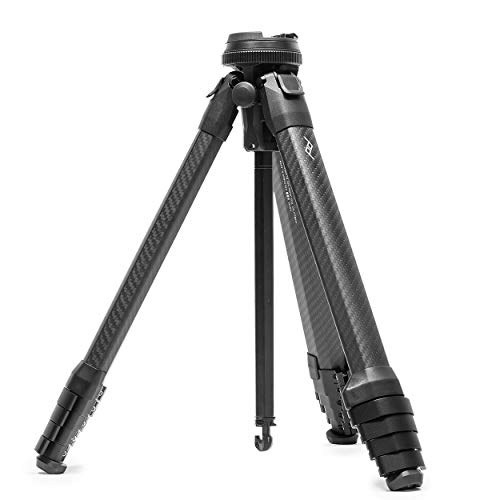 Best overall for hiking · 4.0/5Peak Design Travel Tripod (Carbon Fiber)
 Lightest for multi-day hikes · 3.7/5Gitzo Traveler Series 1 GT1545T
 Best flexible mini · 2.9/5JOBY GorillaPod 5K Kit
- Best pocket tripod · 3.2/5Manfrotto PIXI EVO 2-Section Mini Tripod (MTPIXIEVO-BK)
The short answer
- Best overall for most hikers: the Peak Design Travel Tripod (Carbon Fiber), 2.8 lb with its head, 15.5 in folded and 51.25 in tall with the column down.
- Lightest full-size legs: the Gitzo GT1545T at about 2.3 lb (add your own head), rated to 22 lb with 51.2 in of column-down height.
- Mini options: the 1.6 lb JOBY GorillaPod 5K for rocks and rails, or the 0.57 lb Manfrotto PIXI EVO as a pocket backup.
- In wind, keep the center column down, spread the legs and hang your pack from the hook.
You reach the overlook twenty minutes before sunrise with seven pounds of camera gear already on your back, and the tripod strapped to the pack suddenly feels like the heaviest thing you own. Then the wind picks up on the ridge, you raise the center column to clear the rocks, and the long exposure comes back soft. The best hiking tripod is the one that solves both halves of that morning: light enough that you actually carry it, and stiff enough at the height you shoot. We built this guide around pack weight, wind and trail ground rather than airports and city breaks, and we matched four tripods to the hikers they suit. We did not use these tripods ourselves; every figure below comes from maker spec pages, retailer listings or owner reports, and we say which.
Best hiking tripod picks by pack weight
For most hikers, the best hiking tripod is a full-size carbon travel tripod around 2.3 to 2.8 lb that stands about 51 in with the center column down; a mini tripod only makes sense if you never need standing height. Here is the quick answer by the kind of hiker you are.

These are our picks, from heaviest to lightest support:
- Best overall: the Peak Design Travel Tripod (Carbon Fiber), 2.8 lb with its head built in, 15.5 in folded and rated to 20 lb.
- Lightest full-size legs: the Gitzo Traveler GT1545T at about 2.3 lb, legs only, so you add your own head.
- Wrap-around mini: the JOBY GorillaPod 5K Kit at 1.6 lb, for rocks, rails and branches.
- Pocket backup: the Manfrotto PIXI EVO at 0.57 lb, a tabletop tripod for rest stops.
This table compares the four on the numbers that decide pack weight, height and load:
| Tripod | Weight | Folded length | Height, column down | Max height | Rated load | Sections and lock | Head |
|---|---|---|---|---|---|---|---|
| Peak Design Travel (Carbon) | 2.8 lb with head | 15.5 in | 51.25 in | 60 in | 20 lb | 5, flip (cam) | Built-in ball head |
| Gitzo GT1545T | 2.3 lb legs only | 16.7 in | 51.2 in | 60.2 in | 22 lb | 4, twist | None included |
| JOBY GorillaPod 5K Kit | 1.6 lb kit | 15 in | Not published | Not published | 11 lb | Flexible legs | Ball head, Arca-type |
| Manfrotto PIXI EVO | 0.57 lb | 8.07 in | n/a | 7.7 in | 5.5 lb | 2, tabletop | Integrated ball head |
How we chose these hiking tripods
We kept only tripods that at least two of the top-ranking hiking and backpacking guides recommend, then checked each one against maker pages, retailer spec tables and owner reviews. We read Pack Hacker, We Seek Travel, Backwoods Pursuit, J.M. Peltier and Matt Purciel; retailer list pages such as Best Buy’s did not count as a recommendation. Plenty of other names turned up only once, so they are not reviewed here.

For each tripod we then checked the trail numbers that matter:
- Weight with a head, not just the legs.
- Folded length for a pack strap or side pocket.
- Working height with the center column down.
- Rated load against a real kit, such as a mirrorless camera with 70-200mm lens.
- Leg sections, leg-lock type and how the head adjusts.
- What owners praise and complain about after real hikes.
From our notes: When we lined up the spec sheets for these four tripods, the weight column turned out to be the trap. The Gitzo’s 2.3 lb looks like the lightest full-size option, but that figure is legs and a short column only, while the carbon Peak Design’s 2.8 lb already includes its ball head. Add even a small head to the Traveler and the gap nearly closes. The two full-size picks, by contrast, have almost the same column-down height, 51.2 and 51.25 in. That’s why we compare weight with a head and height without the column, not the headline numbers.
Best tripods for hiking and backpacking, reviewed
Each hiking tripod below fits a different pack and lens, so start with the heaviest lens you carry up the trail. The What we like and What we don’t like lists sit beside each review; the text adds the trail context owners give.

Peak Design Travel Tripod (Carbon Fiber): best overall for hiking
4.0Best Tripod Spec Score out of 5
- Stability8/10
- Portability (weight and folded length)9/10
- Working height9/10
- Build (materials, leg locks, head)8/10
- Value6/10
20 lb rating, 51-inch column-down height and a 15.5 in fold at 2.8 lb are strong for the class; premium price, no independent pan and reports of snapped leg-lock latches hold build and value back.
What we like
- 2.8 lb (1.3 kg) with the head built in, folded to 15.5 in
- 20 lb (9.1 kg) rated load and 51.25 in height with the center column down
- Five-section legs with aluminum cam locks, and the mobile mount stores inside the center column
What we don't like
- Ball head has one adjustment ring and no separate pan, so budget for a pan clamp if you shoot panoramas
- At least one B&H owner reports a cast leg-lock latch snapping
- Premium-priced next to budget carbon tripods
What owners and reviewers say review themes from 1,233 owner reviews, plus 7 posts and reviews we read
Praised for
- So small and light that owners say they now bring a tripod on trips and hikes where they used to leave it at home
- Stable with a 200-600mm or 150-600mm telephoto on it
Common complaints
- Ball head has one adjustment ring and no separate pan
- A cast leg-lock latch snapped for at least one owner
- The bag is tight and the hex tool is easy to lose
Read on: Peak Design Travel Tripod product page (owner reviews on the maker site) (1,233 reviews) · B&H Peak Design Carbon Fiber Travel Tripod owner reviews
Who it's for: Landscape and travel shooters hiking with a mirrorless body and a 24-70mm or 70-200mm who want the smallest pack footprint; the caveats are the premium price, a ball head with no separate pan, and cast leg-lock cams that at least one owner reports snapping.
Pack Hacker and We Seek Travel both recommend this carbon model, and the numbers explain why. The maker’s spec page says it packs to the diameter of a standard water bottle; B&H lists 15.5 in folded and 2.8 lb, with a 20 lb (9.1 kg) load rating. It stands 51.25 in with the column down and 60 in with it up, and drops to 5.5 in for low foreground shots. Five carbon sections release with aluminum cam levers, and the plate is Arca-type compatible.
Owners on the maker’s site and at B&H keep saying the same thing: it’s small enough that they now bring a tripod on hikes where they used to leave one at home. One B&H owner put it as “something I don’t have to ask myself if I should bring it or not because of it’s size and weight!”
The weak points are the head and the latches. The built-in ball head has one adjustment ring and no separate pan, and a B&H review labeled as a promotional “Product Tester” review made the same point. One B&H owner reported that a leg-lock latch “snapped. It’s cheap casted metal.” That is one report, but it echoes others on the same page. If you shoot panoramas, budget for a pan clamp. For a head-to-head with the Manfrotto Befree line, which we did not review here, see our Peak Design Travel Tripod vs Manfrotto Befree Advanced comparison.
Gitzo Traveler Series 1 GT1545T: lightest full-size legs
3.7Best Tripod Spec Score out of 5
- Stability7/10
- Portability (weight and folded length)9/10
- Working height7/10
- Build (materials, leg locks, head)8/10
- Value5/10
Premium carbon build at 2.3 lb with 51.2 in column-down height; two leg angles and no head, plus a premium price for legs alone, keep height at 7 and value at 5.
What we like
- About 2.3 lb (1.06 kg) for legs and short column, 22 lb (10 kg) rated
- Carries a Canon R5 with a 100-500mm for owners, with 5 or more years of use reported
- Spare parts shared with Gitzo Mountaineer; threaded feet accept spikes
What we don't like
- Legs only on this listing, so you buy a head separately
- Only two leg-angle positions (25 and 70 degrees), which limits very low shooting
- Small plastic key that stops the center column rotating can fall out and can take a while to replace, per one owner
What owners and reviewers say review themes from 89 owner reviews, plus 6 posts and reviews we read
Praised for
- Great little tripod after 5+ years, two Japan birding trips and many U.S. trips, working with an EOS R5 and 100-500mm
- A 250 g saving over the Mountaineer matters on 12-day backpacking trips
- Easy to strip down to under 1 kg with the center column removed and a small head
Common complaints
- Only two leg angles, so it cannot get as low as a 90-degree design
- The plastic key that stops the center column rotating falls out easily
- At full height it is only adequate in calm conditions or with smaller lenses
Read on: DPReview forum: Gitzo traveler GT1545T thoughts · B&H Gitzo GT1545T Series 1 Traveler (specs) (89 reviews)
Who it's for: Multi-day backpackers and birders with a mirrorless body and up to a 100-500mm who already own a light ball head and want the lowest tripod weight with premium build; the caveat is two leg-angle positions only, a plastic column key that can fall out, and no head included.
Legs only is the first thing to know about this listing: you get about 2.3 lb (1.06 kg) of carbon legs and a short column, rated to 22 lb (10 kg), and no head. Gitzo’s product page lists 60.24 in maximum height, 8.66 in minimum and a 16.73 in fold; the 51.2 in column-down height comes from retailer listings. Four sections use G-Lock twist locks, the legs fold back over the column, and threaded feet accept spikes.
Backpackers pick it to keep the whole kit near 1.1 kg with a small head. On a DPReview thread, one owner wrote that after five-plus years and two Japan birding trips it “Works well with EOS R5 and 100-500L lens”. The maker itself recommends lenses up to 135-200mm, so treat that 100-500mm use as one owner’s experience, not the maker’s rating.
The trade-offs are real. There are only two leg angles (25 and 70 degrees), so it can’t get as low as a 90-degree design. Another DPReview owner warned that a small plastic key that stops the column turning “can fall out too easily”; the owner adds that it can take a while to replace. A third poster called it adequate at full height only in calm air or with smaller lenses.
JOBY GorillaPod 5K Kit: wrap it around rocks and branches
2.9Best Tripod Spec Score out of 5
- Stability5/10
- Portability (weight and folded length)8/10
- Build (materials, leg locks, head)5/10
- Value5/10
11 lb rating and light weight suit a trail-side rest, but no standing height and three B&H reports of a leg popping or breaking off cap build at 5.
What we like
- 11 lb (5 kg) rated load with an Arca-type compatible ball head
- Folds to about 15 in (38.5 cm) and 1.6 lb (739 g) as a kit
- Legs wrap around poles, branches and rails for uneven ground
What we don't like
- Three of seven B&H reviewers report a leg popping or breaking off and not going back on
- One owner reports the rubber rings on the leg spheres disintegrating after 7 years and no spare parts
- No standing working height, so it does not replace a tripod for eye-level work
What owners and reviewers say review themes from 7 owner reviews, plus 7 posts and reviews we read
Praised for
- Well built aluminum version that holds a Canon R5 with battery grip
- A hiker bought one as a replacement for a Joby lost on the trail
- Works well apart from the leg issue
Common complaints
- A leg popped or broke off and could not be reattached for three reviewers, one of them on the third use
- Rubber rings on the leg spheres disintegrate and go sticky after about 7 years
- Owner was told no spare parts exist because the product changed hands
Read on: B&H JOBY GorillaPod 5K Kit owner reviews (7 reviews)
Who it's for: Hikers with a mirrorless body and a mid-size zoom who want a few ounces of support for self-timers and low shots and can live without standing height; the caveat is that B&H owners report legs popping or breaking off.
Instead of standing on three straight legs, this flexible kit grips. Its flexible aluminum legs wrap around branches, rails and boulders, and the kit weighs 1.6 lb (739 g) with an 11 lb (5 kg) rating and an Arca-type ball head. It folds to about 15 in. JOBY does not publish a working height, so think of it as a support for a rest stop, not eye level.
The praise is specific. One B&H owner bought it to replace a JOBY lost on a hike, and another says it holds a Canon R5 with a battery grip.
Durability is the catch, and it’s not one isolated report. Three B&H reviewers say a leg popped or broke off and could not be reattached, one of them on the third use. One wrote: “On assignment in remote Kenya, a leg popped off this brand new product and couldn’t be put back on. This was only the third use.” Another found the rubber rings on the leg spheres going sticky after about seven years, with no spare parts. Check every joint at home before the trip, and don’t bend legs past their stops.
Manfrotto PIXI EVO 2-Section Mini Tripod (MTPIXIEVO-BK): the 0.57 lb tabletop option
3.2Best Tripod Spec Score out of 5
- Stability5/10
- Portability (weight and folded length)10/10
- Working height3/10
- Build (materials, leg locks, head)7/10
- Value7/10
9 oz and 8 in folded make it nearly free to carry, but a 7.7 in maximum height and flex under heavier mirrorless gear limit it to a pocket add-on, so scores are judged as a mini tripod.
What we like
- 9.4 oz (0.26 kg) and 8.1 in folded, small enough for a coat pocket
- 5.5 lb (2.5 kg) rated load on an integrated ball head
- Two leg angles plus a 90-degree notch for table edges
What we don't like
- 7.7 in maximum height; you need a rock, bench or railing for height
- Owners report flex and shake with a heavier camera, ring light or macro lens
What owners and reviewers say review themes from 107 owner reviews, plus 8 posts and reviews we read
Praised for
- Light and easy to pack on an Arizona hiking trip; one owner did not notice it until needed
- Solid build and a useful ball-head connection
- Handled a Fuji X-T3 with a 55-200 lens for Pack Hacker, with the caveat that results vary with kit
Common complaints
- Too wobbly for a Nikon Z6II with a battery grip, 105mm macro and ring light; the ball head post flexes
- One owner could not use it with a 290 g Sony ZV-E10 for vertical video
- Images shake if the camera is touched, so a wireless release is needed
Read on: B&H Manfrotto PIXI EVO owner reviews (107 reviews) · Pack Hacker Manfrotto PIXI EVO review
Who it's for: Ultralight hikers with a compact or small mirrorless camera who want a 9 oz backup for low angles and self-timer shots; the caveat is a 7.7 in maximum height and owners who find it flexes under heavier mirrorless kit.
At 9.4 oz (0.26 kg) and 8.07 in folded, the PIXI EVO is the one tripod here you will never leave behind. Manfrotto’s spec page gives a 2.5 kg (5.5 lb) safety payload; B&H lists 7.7 in maximum height. Two aluminum leg sections, two leg angles and an integrated ball head keep it simple.
A B&H owner took it on a hiking trip in Arizona and “didn’t even notice I had it until I needed it.” That’s the job: a self-timer shot from a rock or a low waterfall frame from a ledge.
Heavier kits push it too far. One B&H owner found the ball head post flexing with a Nikon Z6II, grip, 105mm macro and ring light, and another couldn’t use it for vertical video with a 290 g Sony ZV-E10. A third says you need a wireless release, because touching the camera shakes the frame.
Mini tripod for hiking or a full-size tripod?
A mini tripod for hiking is enough only if you shoot from rocks, rails and ledges and never need standing height; for sunrise and sunset shots over a foreground, a full-size tripod earns its weight. The PIXI EVO tops out at 7.7 in and the GorillaPod 5K has no published height, so both need something to stand on.

A full-size carbon fiber tripod pays for itself the moment you want a waterfall long exposure with an ND filter, a level horizon above trailside brush, or a 70-200mm at dusk. If your hikes are mostly about landscapes, our landscape photography tripod picks for low angles and wind go further on low-angle reach. Carrying a mini as well as a full-size tripod is a reasonable compromise for long trips, because 9.4 oz rarely changes a decision.
What about a trekking pole? Some hikers press one into service as a monopod, but a single pole is not a tripod, and for multi-second exposures we would not count on it.
Wind, leg angles and uneven ground
In wind, a backpacking tripod is steadiest with the center column down, the legs short and spread wide, and weight hanging from the ballast hook. Every pick here loses stiffness as you go higher, so trade height for stability on exposed ground.
A raised column is a single thin post, so it amplifies every gust and every shutter press. Extend the thickest leg sections first and leave the thinnest ones for last. A wider leg angle lowers the camera and widens the base on slopes, but the Gitzo offers only two angles (25 and 70 degrees), so pick the wider one on exposed ground and accept a lower camera.
Use what you’re already carrying for ballast. Hanging your pack from the ballast hook adds weight low in the frame, and a DPReview poster suggested “hanging a counter weight from the center column, ensuring not to exceed the weight limit.” Keep the bag from swinging by letting it touch the ground lightly.
Feet matter on trail. Spiked feet grip soft ground, snow and ice; rubber feet are better on bare rock. The GT1545T’s threaded feet accept spikes, and spikes are available for the Peak Design, though one owner notes they stop it fitting its case.
Problems hikers run into, and the fix
Five complaints come up again and again in hiking-tripod threads, and most have a fix in technique or in which tripod you pick. We pulled them from DPReview forum threads and Reddit, and we’ve noted the matching pick for each.
“Even the light tripods are too heavy”
Weight is a recurring complaint in DPReview hiking threads. Hikers already carrying about 7 lb of camera gear for waterfalls struggle to justify 2.8 lb more, and one DPReview poster said the carbon model, at around 2.8 lb, was the lightest they had found. Our fix: the GT1545T legs with a light head for the lowest full-size weight, or the PIXI EVO when any tripod is better than none.
“Too small and wobbly for long exposures or a 100-400”
Photographers who add ND filters, astro or longer lenses outgrow small travel tripods, a recurring theme in DPReview forum threads. One poster wrote: “i’m afraid the travel one is too small and wobbly for logn exposure with nd filters or astro or when using the 100-400”. Our fix is load headroom and fewer joints: the Gitzo GT1545T’s 22 lb rating and four-section legs or the Peak Design’s 20 lb rating, with the column down and the pack on the hook. If your lens is longer than about 200mm, none of these four is built for it.
Center column height vs stability
Reaching eye level often means raising the column, and owners know what that costs. One DPReview poster was blunt: “The center column make the Travel Tripod less stable so you should not extend it.” Choose the most column-down height you can carry; the Peak Design (51.25 in) and the Gitzo (51.2 in) are level here. Our guide to how tall a tripod should be for your height shows the simple math, and a tilting screen makes chin height workable.
Five leg sections and plastic locks
Experienced users warn that more sections and plastic flip locks mean more wobble and more parts to break, advice that turns up in DPReview threads. Leg sections and wobble go together: each joint adds a little play. If you shoot long exposures, the four-section GT1545T trades a slightly longer fold (16.7 in against 15.5 in) for fewer joints. With the five-section Peak Design, collapse the thinnest sections first.
Integrated ball head with no friction control
Compact built-in heads are often on-off only. One DPReview hiker, writing about the Ulanzi head on a travel tripod, noted “there is no friction control of the ball (it is pretty much on or off with a leaver)”. That makes fine framing with a heavy lens fiddly. The legs-only GT1545T lets you choose your own head with proper friction and pan controls, and the Peak Design owes its speed to a single ring, so budget for a pan clamp if you shoot panoramas.
How to choose a hiking tripod
Choose a hiking tripod in this order: weight with the head, column-down height, load against your real kit, then folded length, locks and plate. The lightest number on a spec sheet means little if the tripod can’t hold your lens at the height you shoot.
The checks we would run before buying:
- Weight and material. Carbon fiber is lighter for the same stiffness and damps vibration faster; aluminum costs less and survives knocks. Both full-size picks here are carbon fiber.
- Folded length and carry. 15 to 17 in fits most side pockets and pack straps; the PIXI EVO fits a coat pocket.
- Max load capacity vs your camera. A rated load is a ceiling, not a comfortable working load. Add your body, heaviest lens and head, and leave a wide margin for wind and a raised column.
- Leg locks and sections. A twist lock is slim and easy to grip with gloves but picks up grit; a flip lock shows at a glance that it’s closed. Fewer sections are stiffer.
- Packed length with the head. Measure it against your pack before you buy; a travel tripod for hiking should strap to a backpack side without poking past the top.
- Arca-Swiss compatibility. An Arca-Swiss plate is the dovetail standard most heads and L-brackets share. The Peak Design and JOBY kits, which ship with a head, use Arca-type compatible plates; our Arca-Swiss plate explainer covers the details.
If you mostly fly rather than hike, our roundup of travel tripods for mirrorless cameras weighs carry-on fit instead of trail weight, and the travel tripods hub lists every compact tripod we cover.
Which hiking tripod should you buy?
Buy the tripod that matches the heaviest lens you carry and the longest day you hike. Here is how we would decide:
- Mirrorless with a short zoom: the carbon Peak Design Travel Tripod.
- Longer telephoto or heavy kit: none of these four is a heavy-lens tripod; the Gitzo is the sturdier of the two full-size picks on paper (22 lb against 20 lb), but its maker recommends lenses up to 135-200mm.
- Multi-day backpacker who owns a head: the Gitzo legs.
- Minimalist or ultralight packer: the PIXI EVO, or the GorillaPod if you shoot from trees and rails and check the joints first.
Verdict on the best hiking tripod
For most hikers, the best hiking tripod is the carbon Peak Design Travel Tripod; gram-counters should take the GT1545T legs, and minimalists a PIXI EVO or GorillaPod. Each one solves a different part of that windy sunrise.
So for the hiker on the ridge with seven pounds of camera gear: if the kit is a mirrorless body and a 24-70mm, the carbon Travel Tripod adds 2.8 lb and stays near eye level with the column down. If it’s a 70-200mm f/2.8, the Peak Design’s 20 lb rating covers it, but keep the column down and the pack on the hook. Whatever you carry, drop the column, spread the legs, hang the pack and use the self-timer. That’s the sharp frame we wanted from the start.
Questions photographers ask
What is the best hiking tripod?
For most hikers it is the Peak Design Travel Tripod (Carbon Fiber): 2.8 lb with its ball head, 15.5 in folded, rated to 20 lb and 51.25 in tall with the center column down. If you want the lowest full-size weight and already own a head, the Gitzo GT1545T legs are about 2.3 lb and rated to 22 lb.
How much should a hiking tripod weigh?
Full-size travel tripods for hiking run about 2.3 to 2.8 lb in our picks, and you should compare them with a head attached. The Gitzo GT1545T is about 2.3 lb for legs only, while the carbon Peak Design weighs 2.8 lb with its head built in.
Is a carbon fiber tripod worth it for backpacking?
Usually, if you hike often. Carbon fiber is lighter for the same stiffness and damps vibration faster; both full-size picks here, the Peak Design Travel Tripod (Carbon Fiber) and the Gitzo GT1545T, are carbon fiber and weigh 2.8 lb with a head and 2.3 lb legs only.
Can a mini tripod replace a full-size tripod on the trail?
Only if you shoot from rocks, rails and ledges. The Manfrotto PIXI EVO tops out at 7.7 in and the JOBY GorillaPod 5K has no published working height, so neither gives standing height for a sunrise over a foreground.
How do I keep a lightweight tripod steady in wind?
Keep the center column down, extend the thickest leg sections first, spread the legs wide and hang your pack from the ballast hook without exceeding the rated load. Fire with the self-timer or a remote so your hand adds no shake.
Is a 4-section or 5-section tripod better for hiking?
A 4-section tripod such as the Gitzo GT1545T has fewer joints, so it is stiffer for long exposures. A 5-section design like the Peak Design folds shorter, to 15.5 in, which helps on a pack strap.
Why you can trust this guide
- Products are checked against manufacturer specifications, user manuals and long-term owner reports.
- Each pick is scored on the Best Tripod Score: stability, portability (weight and folded length), working height, build quality and value. Scores come from published specs and owner reports, not hands-on testing.
- We never accept payment for placement. Affiliate commissions do not affect rankings.
Last reviewed . Read our research process and editorial policy, or report an error.
Sources
- Peak Design: Travel Tripod
- Gitzo: Traveler Series 1 4-section tripod GT1545T
- Manfrotto: PIXI EVO 2-section mini tripod
- JOBY GorillaPod 5K Kit product documentation (PDF via B&H)
- We Seek Travel: best lightweight tripod for hiking
- Pack Hacker: the best travel tripod
- Matt Purciel: best tripods for landscape photography
- J.M. Peltier: five best lightweight tripods for backpacking and travel
- DPReview forum: Gitzo Traveler GT1545T thoughts
Reviews and discussions we read
- Peak Design Travel Tripod product page (owner reviews on the maker site) (1,233 reviews)
- B&H Peak Design Carbon Fiber Travel Tripod owner reviews
- DPReview forum: Gitzo traveler GT1545T thoughts
- B&H Gitzo GT1545T Series 1 Traveler (specs) (89 reviews)
- B&H JOBY GorillaPod 5K Kit owner reviews (7 reviews)
- B&H Manfrotto PIXI EVO owner reviews (107 reviews)
- Pack Hacker Manfrotto PIXI EVO review

Best Tripod Editorial Team
Research & editorial
We research tripods, monopods and heads for photographers and video creators: real working height with and without the center column, load capacity against the gear you actually shoot, packed length for a carry-on, leg-lock speed and Arca-Swiss compatibility. Every guide follows our published research process and editorial policy.
