In this guide (8 sections)
- Our top picks
- Landscape Photography Tripod Picks at a Glance
- The Best Landscape Photography Tripods, Pick by Pick
- What a Landscape Photography Tripod Needs
- Legs Only or a Landscape Tripod With a Head?
- Landscape Tripod Problems in the Field, and the Fix
- Which Landscape Photography Tripod Should You Buy?
- Questions photographers ask
We earn a commission if you buy through links on this page, at no extra cost to you. It never changes what we recommend. How we make money.
How we picked these
- Review themes from 1,353 verified-buyer and owner reviews on retailer sites, so every pick shows what buyers praise and complain about.
- 17 owner posts, user discussions and expert reviews read across 13 sources.
- Every spec checked against 11 maker and retailer pages.
- We did not test these products ourselves, and we say so. All sources are linked at the end of this guide.
Our top picks
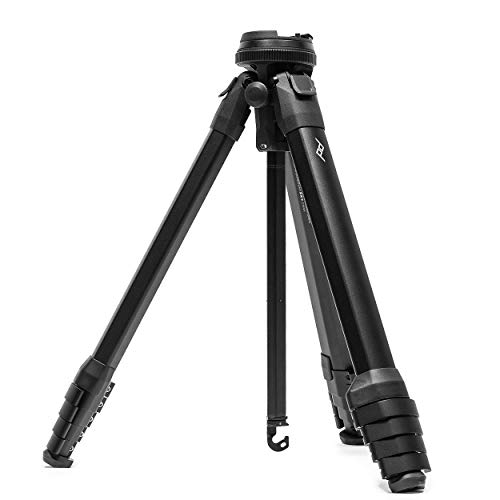 Best for hiking · 3.7/5Peak Design Travel Tripod (Aluminum)
 Best light kit for mirrorless · 3.4/5Manfrotto Befree Advanced Aluminum Travel Tripod (Lever, Ball Head)
 Best full-size value · 3.5/5Vanguard Alta Pro 2+ 263AB Gen 2 Aluminum Tripod with Ball Head
 Best legs-only workhorse · 3.5/5Manfrotto 190XPRO3 Aluminum 3-Section Tripod (MT190XPRO3)
 Best premium legs · 3.7/5Feisol CT-3472 Elite Rapid 4-Section Carbon Fiber Tripod
The short answer
- Hiking in with a mirrorless kit: the Peak Design Travel Tripod (Aluminum), 15.5 in folded with a built-in ball head and a 5.5 in low mode.
- Driving to the view on a budget: the Vanguard Alta Pro 2+ 263AB Gen 2 (55.6 in with the column down) or the legs-only Manfrotto MT190XPRO3 (3.54 in minimum height).
- Heavy telephoto kit and no center column: the Feisol CT-3472 carbon legs, rated to 66 lb and 57.87 in tall, head sold separately.
- Most soft long exposures come from a raised column, wind or the shutter press, so keep the column down, weight the tripod and use a 2-second timer.
Picture a windy ridge at sunrise. The ND filter is on and the column is cranked up to reach eye level. The foreground rocks sit just below the frame, and the 30-second exposure comes back soft. A landscape photography tripod is supposed to prevent exactly that. We think the right one does three things a general tripod often doesn’t. It reaches a useful working height with the center column down. It gets low enough for foreground rocks and flowers. And it stays planted in wind and on uneven ground. Below are five picks the top guides to a tripod for landscape photography recommend. We checked the specs against maker pages and read what owners report. We did not use these tripods ourselves; every number is a maker’s claim, a reviewer’s figure or an owner report, and we say which.
Landscape Photography Tripod Picks at a Glance
The best landscape photography tripod is the one you will carry to the view that still reaches near eye level with the column down and gets low for foregrounds. Pick by how far you walk, then by your heaviest lens.

Here is how we would match each tripod to a landscape shooter:
- Hiking in with a mirrorless kit: the Peak Design Travel Tripod (Aluminum), 15.5 in folded with a built-in ball head.
- Lightest kit with a full head and flip locks: the Manfrotto Befree Advanced, 3.51 lb with its 494 ball head.
- Roadside views on a budget, with height: the Vanguard Alta Pro 2+ 263AB Gen 2, 55.6 in with the column down.
- Ground-hugging foregrounds, legs only: the Manfrotto MT190XPRO3, down to 3.54 in with its 90-degree column.
- Heavy telephoto and no column at all: the Feisol CT-3472 carbon legs, rated to 66 lb.
This table compares the five on the numbers that decide a landscape shot: height with the column down, minimum height, packed size, weight, load and what comes in the box.
| Spec | Peak Design Travel (Alu) | Befree Advanced (Lever) | Alta Pro 2+ 263AB Gen 2 | MT190XPRO3 | Feisol CT-3472 |
|---|---|---|---|---|---|
| Height, column down | 51.25 in (ShutterMuse) | 50.39 in | 55.6 in | 53.15 in | 57.87 in (no column) |
| Height, column up | 60 in | 59.45 in | 68.2 in | 62.99 in | 74.80 in with optional column |
| Minimum height | 5.5 in (low mode) | 15.75 in (Manfrotto listing) | 8.4 in | 3.54 in | 3.35 in |
| Folded length | 15.5 in | 15.75 in | 28.3 in (27.4 in on another Vanguard page) | 23.23 in | 20.47 in |
| Weight | 3.44 lb with head | 3.51 lb with head | 4.8 lb with head | 4.41 lb, legs only | 3.92 lb, legs only |
| Max load | 20 lb | 19.84 lb | 22 lb | 33.07 lb | 66 lb |
| Sections / lock | 5, lever-style (owner report) | 4, flip | 3, twist | 3, flip | 4, lock type not on spec table |
| Head included | Built-in ball head | 494 ball head | Ball head | None | None |
How we picked these landscape tripods
We kept only models (or, for the Alta Pro, MT190 and Feisol, the same model line) that at least two of the top-ranking landscape tripod pages recommend, that have a clear Amazon US listing, and whose specs we could check on the maker’s own page. We read Matt Purciel, digital-photography-school, Improve Photography, Tim Shields, Alex Armitage, Alan Ranger, Chris Sidoruk and the B&H and Adorama landscape lists. Several premium names came up too: the Gitzo Series 1 Traveler, the FLM CP30-L4 II, the Benro Mammoth and the Really Right Stuff BH-30 ball head. They either appeared on only one page or had no clear Amazon US listing, so they are not reviewed here.
From our notes: When we lined up the five spec sheets side by side, the minimum-height row surprised us more than the weight row. The two legs-only tripods go lowest, 3.35 in for the Feisol and 3.54 in for the MT190XPRO3, while Manfrotto lists the Befree Advanced at 15.75 in, the same figure as its folded length. The maker data also disagreed with itself: Vanguard’s own pages give the Alta Pro 28.3 in and about 27.4 in folded. So we treat every figure as the maker’s claim, name the source when two disagree, and sorted these picks by low-angle reach and column-down height, not by grams.
The Best Landscape Photography Tripods, Pick by Pick
Each landscape tripod below solves a different trail-or-roadside problem, so start with how far you carry it and how low you shoot. The What we like and What we don’t like lists sit beside each review; the text adds the field context owners give.

Peak Design Travel Tripod (Aluminum): best for hiking in
3.7Best Tripod Spec Score out of 5
- Stability7/10
- Portability (weight and folded length)9/10
- Working height7/10
- Build (materials, leg locks, head)8/10
- Value6/10
Smallest and quickest to deploy of the five and rated to 20 lb, but the thin lower sections and column-dependent height cost stability and height points.
What we like
- Packs to 15.5 in and weighs 3.44 lb (aluminum) with the head built in
- Low mode puts the camera 5.5 in off the ground for foreground-heavy frames
- 20 lb rating covers a full-frame body with a 70-200mm
What we don't like
- Height without the center column is 51.25 in, below eye level for many adults
- Owners on the maker page say the legs can slip under load until tightened, and the built-in head is not great for panning
- Spike feet make it too fat for the stock case, per one owner
What owners and reviewers say review themes from 1,233 owner reviews, plus 5 posts and reviews we read
Praised for
- Very fast set-up and a compact packed shape
- Stable enough for a full-frame body with a 70-200mm or a 150-600mm
Common complaints
- Legs can slip under heavy loads until tightened, which makes them stiffer to open
- Built-in head is not great for panning; spike feet do not fit the stock case
Read on: Peak Design Travel Tripod owner reviews (maker page) (1,233 reviews)
Who it's for: Landscape shooters who hike to the shot with a mirrorless body and a 24-70mm or 70-200mm. Key caveat: the 60 in maximum needs the center column raised (51.25 in with it down), and the thin lower sections flex more than a thicker-legged tripod in wind.
For the shooter who walks an hour to the view, this aluminum Peak Design is the smallest package of the five. Peak Design’s product page lists 3.44 lb with the head built in, a 20 lb load rating and 60 in at full height. ShutterMuse’s spec table gives 51.25 in with the column down, 5.5 in in low mode and a 15.5 in fold. That low mode is the useful landscape detail: it puts the lens close to rocks and wildflowers without a separate short column.
Owners on the maker page like how fast it sets up and how compact it packs. One wrote that it is “most often paired with a heavy and bulky Canon 6D SLR + 70-200mm and is rock-solid.” The complaint we saw repeated is leg slip: owners there say the legs needed tightening before they stopped sliding under a camera or a bag on the hook, which then made them stiffer to open. Another found the built-in head poor for panning. That matters if you shoot a panorama. Because 51.25 in sits below eye level for many adults, plan to shoot from a tilting screen or accept the column on calm days. Our Peak Design vs Befree Advanced comparison goes deeper on the two travel picks.
Manfrotto Befree Advanced Aluminum Travel Tripod (Lever, Ball Head): best light kit for mirrorless
3.4Best Tripod Spec Score out of 5
- Stability6/10
- Portability (weight and folded length)8/10
- Working height6/10
- Build (materials, leg locks, head)6/10
- Value8/10
Light, quick and complete with a head, but 4 thin sections and a 50.39 in column-down height limit stability and eye-level reach.
What we like
- 3.51 lb with the ball head and 15.75 in folded
- Three leg angles (22, 54 and 89 degrees) for uneven ground
- Plate fits both Manfrotto RC2 and Arca-Swiss style clamps, per the maker
What we don't like
- Maker lists 50.39 in with the center column down, short for tall shooters
- Owner reports point to soft long exposures in wind or with the column raised
- A reviewer who was given a carbon unit found the rubber feet twist easily
What owners and reviewers say from 2 reviews and posts we read
Praised for
- Light enough to carry all day and sharp in wind with the center column retracted (carbon twist version)
Common complaints
- Poor for long exposures in one Reddit thread (older Befree, not clearly the Advanced)
- Rubber feet twist easily and knobs are plastic (reviewer given a free carbon unit)
Read on: Trevor Sherwin: Manfrotto Befree Advanced review (free carbon twist sample) · Reddit r/AskPhotography: Your opinion on Manfrotto Befree tripod?
Who it's for: Mirrorless landscape and cityscape shooters who want a daypack tripod for a 24-70mm or a small telephoto. Key caveat: keep the center column down for long exposures, and check the plate if your kit uses Arca-Swiss L-brackets.
Mirrorless shooters who want flip locks and a full-size head will find the Befree Advanced the most complete light kit here. The Manfrotto spec page lists 3.51 lb with the 494 ball head, 15.75 in folded, 50.39 in with the column down and a 19.84 lb safety payload. Three leg angles (22, 54 and 89 degrees) help on a slope or a boulder field. Manfrotto says the 200PL PRO plate fits both RC2 and Arca-Swiss style clamps.
Tim Shields recommends it for travel but notes it is not as sturdy as heavier tripods with heavy lens combinations. A review by Trevor Sherwin, who says he was given a free carbon twist-lock unit (not this aluminum lever version), found long exposures sharp in strong wind with the column retracted and soft with it raised. He also felt the rubber feet twist easily. In an r/AskPhotography thread, one owner of an older Befree, not clearly the Advanced, called it poor for long exposures. Our reading: keep the column down and treat it as a mirrorless tripod.
Vanguard Alta Pro 2+ 263AB Gen 2 Aluminum Tripod with Ball Head: best full-size value
3.5Best Tripod Spec Score out of 5
- Stability8/10
- Portability (weight and folded length)4/10
- Working height8/10
- Build (materials, leg locks, head)7/10
- Value8/10
Tall, stiff and rated to 22 lb for the money, but it is long and heavy to carry and the maker data is inconsistent.
What we like
- 68.2 in maximum and 55.6 in with the column down reach eye level for most adults
- Multi-angle center column goes horizontal for low and macro foregrounds, minimum 8.4 in
- 22 lb rating and a 5-year warranty
What we don't like
- 4.8 lb and 28.3 in folded is heavy and long for hiking
- Vanguard's own pages disagree on folded length (27.4 vs 28.3 in) and on the head's clamp type
What owners and reviewers say review themes from 1 owner reviews, plus 4 posts and reviews we read
Praised for
- Very solid and stable without being terribly heavy
- Easy twist locks and clear markings on the horizontal column
Common complaints
- Heavier than carbon or travel tripods
- Long folded length
Read on: DPReview forum: Vanguard Alta Pro 2+ 263AB100 tripod review · Reddit r/AskPhotography: Is the Vanguard Alta Pro 263AB 100 a good tripod? · Vanguard USA: 263AB Gen 2 customer review (1 reviews) · Night Sky Pix: Vanguard Alta PRO 263AB review (earlier generation, not an owner post)
Who it's for: Car-based landscape shooters with a full-frame body and a 70-200mm who want height and a low-angle column without paying for carbon. Key caveat: 4.8 lb and about 28 in folded, so it is a roadside tripod, not a long-hike one.
If you shoot near the car, the Alta Pro gives you the most height for the least money of the five. Vanguard’s page lists 68.2 in at full height, 55.6 in with the column down, a 22 lb load and a 5-year warranty. Its multi-angle column swings horizontal, which drops the camera to 8.4 in for low and macro foregrounds. Three thick twist-lock sections, 26 mm at the widest, keep it stiff.
Owners agree it is solid. On the DPReview forum one owner called it “very solid and stable, yet not terribly heavy,” and a Vanguard store reviewer liked the easy twist locks and clear markings on the horizontal arm. The repeat complaint, from Reddit and DPReview alike, is weight and length: 4.8 lb and 28.3 in folded (another Vanguard page says about 27.4 in). The head data is contested too. Vanguard names a BH-60 head while the Amazon title says Arca ball head, so check the clamp before you buy an Arca-Swiss L-bracket for it.
Manfrotto 190XPRO3 Aluminum 3-Section Tripod (MT190XPRO3): best legs-only workhorse
3.5Best Tripod Spec Score out of 5
- Stability8/10
- Portability (weight and folded length)4/10
- Working height7/10
- Build (materials, leg locks, head)8/10
- Value8/10
Rigid, adjustable and well liked by owners for the money, but legs only and bulky to carry.
What we like
- 62.99 in maximum and 53.15 in with the column down
- Four leg angles (25, 46, 66, 88 degrees) and a 90-degree column for low shots, minimum 3.54 in
- 33.07 lb safety payload, far above a mirrorless kit
What we don't like
- Legs only: you must buy a head and plate
- No leg spreader, so the legs must be set carefully on soft or slick ground
- 23.23 in folded and 4.41 lb is bulky for long hikes
What owners and reviewers say review themes from 97 owner reviews, plus 3 posts and reviews we read
Praised for
- A sturdy, fast flip-lock tripod that works with gloves in the cold
- Improvements over older Manfrotto models were right where owners wanted them
Common complaints
- No leg spreader, so keep the legs fully spread
- Bulky and heavy next to travel tripods
Read on: Photography by Grant Glendinning: Manfrotto 190XPRO3 review · B&H customer reviews, Manfrotto MT190XPRO3 (97 reviews) · Reddit r/AskAstrophotography: Would the MT190XPRO3 be sturdy enough
Who it's for: Drive-up landscape shooters with a DSLR or mirrorless kit who want a stiff pair of legs and will add their own Arca-Swiss ball head. Key caveat: 4.41 lb and 23.23 in folded, no leg spreader, no head included.
Drive-up landscape shooters who already own a good head get the stiffest aluminum legs here for the money. The MT190XPRO3 is sold as legs only, rated to a 33.07 lb safety payload, 53.15 in tall with the column down and 62.99 in with it up. Four leg angles (25, 46, 66 and 88 degrees) plus a column that swings to 90 degrees take the camera down to 3.54 in. digital-photography-school calls it its best semi-professional landscape tripod.
Landscape photographer Grant Glendinning, who replaced his 055PROB with it, wrote that it “strikes the perfect balance of sturdiness and portability,” and liked that the flip locks work with gloves in the cold. A B&H owner said the improvements over an older Manfrotto were right where they needed to be. The caveat comes from an r/AskAstrophotography reply: there is no leg spreader, so set each leg carefully on mud or slick rock. It is also 23.23 in folded and 4.41 lb before you add a head and plate, so budget for both.
Feisol CT-3472 Elite Rapid 4-Section Carbon Fiber Tripod: best premium legs
3.7Best Tripod Spec Score out of 5
- Stability9/10
- Portability (weight and folded length)6/10
- Working height7/10
- Build (materials, leg locks, head)9/10
- Value4/10
Heavy-duty carbon with a 66 lb rating at under 4 lb, but legs only and the cost is high.
What we like
- 66 lb (30 kg) rated load at 3.92 lb
- Column-free design, 57.87 in maximum and 3.35 in minimum height
- 20.47 in folded and sold with a tripod bag (maker page)
What we don't like
- No head or center column included; the column kit and steel spikes are extra
- Amazon listing is thin and does not state the Mark 2 version the maker sells
What owners and reviewers say review themes from 22 owner reviews, plus 3 posts and reviews we read
Praised for
- Very well built and lighter than expected for landscape work
- Held up through years of travel and river and sea use (CT-3442 owner)
Common complaints
- Rubber feet came off on one owner's CT-3442
- Owner feedback on the CT-3472LV at B&H is mixed
Read on: Improve Photography: Pro tripods for landscape photographers (CT-3442 owner) · B&H customer reviews, Feisol CT-3472LV (22 reviews) · Dave Morrow Photography: landscape gear (Feisol CT-3342 user)
Who it's for: Serious landscape shooters with a full-frame body and a 100-400mm or 150-600mm who want carbon legs without a center column and will add their own head. Key caveat: the Amazon listing is thinly stocked and does not say M2, and it is priced like a premium tripod.
Serious shooters with a long telephoto and a heavy ball head get the most load per pound from this Feisol. Feisol’s spec page lists 3.92 lb, a 66 lb load, 57.87 in tall with no center column, 3.35 in minimum height and 20.47 in folded. That column-free design is the reason we include it: nothing thin sits between the legs and the head, so the tallest legs-only height of the five is also the stiffest way to get there.
A B&H owner called it “Very well built tripod. Lighter than I thought it would be,” bought for landscape work. Improve Photography’s founder, who shoots the related CT-3442, praises its durability through travel and river and sea use, but reports that the rubber feet came off all three legs and he needed replacements. The optional center column kit and steel spikes cost extra, and there is no head or plate. One more caution: the maker sells a Mark 2 version and the Amazon listing does not say which version it is, so confirm before ordering.
What a Landscape Photography Tripod Needs
A landscape photography tripod needs four things a general tripod can skip: column-down height near eye level, low-angle reach, stiffness in wind, and a load rating well above your heaviest lens and head. Weight matters only after those. The tripod that stays at home takes no pictures.

That is also how we would judge the best tripod for landscape photography in any price tier. Max height on the box is the least useful number, because it assumes the column is up.
Height without the center column
Working height is the legs-only figure plus your head and camera. Our picks run from 50.39 in (Befree Advanced) to 57.87 in (Feisol, before a head). Our guide on how tall a tripod should be for your height walks through the math, and shooters over six feet should see our tall-photographer tripod picks with 55 in or more before the column.
Low-angle reach for foreground shots
Strong landscape compositions often put rocks, ice or flowers a few inches from the lens. Minimum heights here range from 3.35 in (Feisol) and 3.54 in (MT190XPRO3) to 8.4 in (Alta Pro), 5.5 in (Peak Design low mode) and 15.75 in (Befree, per Manfrotto). Wide leg angles and a column that swings horizontal or comes out are what get a tripod low. Some tripods use a reversible column instead; of these five, the Alta Pro and MT190XPRO3 swing theirs horizontal. Each extra leg angle stop also helps on uneven terrain, where one leg sits on a rock and another in a dip.
Carbon fiber vs aluminum on the trail
Carbon fiber is lighter for the same stiffness. It also damps vibration faster, and that dampening shows up as sharpness on long exposures. Aluminum is cheaper and shrugs off knocks on rock. Four of our five picks are aluminum because they are the value end of the field; the Feisol is the carbon fiber tripod for anyone who hikes far with heavy glass.
Leg locks and sections
Fewer leg sections mean thicker lower legs, more rigidity and less flex. More sections pack shorter. Flip locks (Befree, MT190XPRO3) show at a glance when they are closed and work with gloves, per one 190 owner. Twist locks (Alta Pro) are slimmer but pick up grit, so rinse them after sand or salt.
Load rating against a real landscape kit
A tripod’s load capacity is a ceiling, not a comfortable working load. Add the published weights of your body, heaviest lens and head, then choose well above that total. For a full-frame body with a 70-200mm, the roughly 20-22 lb ratings of the three kits are enough on paper; for a 150-600mm, the MT190XPRO3 (33.07 lb) or Feisol (66 lb) give real headroom.
Legs Only or a Landscape Tripod With a Head?
Three of our picks include a ball head and two are legs only, and that changes both the real weight and the real cost of a landscape tripod. Legs-only tripods let you choose a head that suits how you frame.

These are the head types landscape shooters usually choose between:
- Ball head: one knob frees all axes, so it is the fastest for changing compositions at sunrise and sunset. It can creep under a heavy lens if it is undersized.
- Geared head: knobs move each axis by millimeters. That makes horizon leveling easy, and it suits focus stacking and panoramas.
- Pan-tilt head: moves one axis at a time, slower but deliberate. Our ball head vs pan-tilt head guide for landscapes compares both.
An Arca-Swiss plate and L-bracket let you flip from horizontal to vertical without the camera flopping over the side of the head. Leave the quick release plate on the camera between stops, so it can’t be left behind on a rock. Arca-Swiss is a dovetail standard, so a plate from one brand usually fits another’s clamp. The Befree’s plate is Arca-Swiss style per Manfrotto; the Vanguard’s clamp type is contested between its pages. Our Arca-Swiss plate explainer covers what fits what.
Landscape Tripod Problems in the Field, and the Fix
Most soft landscape frames come from five repeat problems that forum threads describe again and again, and most are fixed with technique before you spend money. Here is each one with the fix and the pick that avoids it.
Wind makes the tripod vibrate
Wind and vibration are a recurring complaint in Photo Stack Exchange threads on long exposures. One answer puts it plainly: “Wind will vibrate across the legs and transmit up to the camera.” The fix, in order: collapse the thinnest leg sections first, spread the legs wide, keep nothing dangling loose, and stand upwind as a windbreak. Thicker 3-section legs like the Alta Pro and MT190XPRO3 resist gusts better than thin 5-section legs.
Feet slip or sink on sand, mud, grass and rock
Unstable footing comes up across Reddit and photography Q&A sites. On r/AskPhotography, a seascape shooter was told: “You’re not putting the tripod deep enough into the sand. It’s got to be pretty deep to be stable.” Work the feet down until they stop sinking. Use spike feet on sand and mud, and rubber feet on smooth rock. The Alta Pro’s feet swap for spiked ones, Feisol and Peak Design sell spikes separately, and on the MT190XPRO3, with no leg spreader, check each foot before a long exposure.
Center column makes it ring
A raised column is the vibration cause we saw named most in forum threads. An r/AskPhotography reply sums it up: “The extended center column just serves to amplify and prolong the vibrations you introduced by tripping the shutter.” The fix is to extend the legs first and leave the column down. The Feisol avoids the problem entirely, and the Alta Pro’s 55.6 in column-down height means you rarely need to raise it.
Adding weight without sandbags
Owners on hiking forums want ballast but not extra gear. One DPReview poster with a small travel tripod said that with the center column raised “there is extremely little room to hang my camera backpack from the hook for stability”. Hang your pack from the hook so it just touches the ground and cannot swing, or wedge a stone bag between the legs. Taller, wider-spread tripods leave more room for a bag, and Peak Design owners note the legs must be tightened before they hold the extra weight.
Shutter-press shake in the first seconds
Pressing the shutter starts a small vibration that blurs the opening of an exposure, a recurring point in Photo Stack Exchange threads on long lenses. One answer says: “If you don’t have a remote release cable, then use the exposure delay mode (Nikon term) or the self timer mode.” A 2-second timer is free on every camera, and an electronic first-curtain shutter helps on mirrorless bodies.
Which Landscape Photography Tripod Should You Buy?
For most hikers the Peak Design Travel Tripod (Aluminum) is the landscape photography tripod to carry; for roadside work the Vanguard Alta Pro 2+ or the MT190XPRO3 legs; and for heavy lenses the Feisol CT-3472. The Befree Advanced is the light all-in-one for a mirrorless kit.
So back to that windy ridge at sunrise. If the hike was long, the Peak Design gets there in a 15.5 in fold and drops to 5.5 in for the foreground rocks. If the car is close, the Alta Pro or the MT190XPRO3 stands taller with the column down and goes lower still. If a long lens is on the camera, the column-free Feisol takes the column out of the equation. Whichever you choose, we would keep the column down, weight the hook and use the 2-second timer.
For more carry-on options beyond landscapes, our travel tripods for mirrorless cameras roundup lists more. Before you order, run your height and heaviest lens through our tripod buying checklist, or browse every full-size model in the camera tripods hub.
Questions photographers ask
What is the best tripod for landscape photography?
It depends on how far you walk. For hiking, we point to the Peak Design Travel Tripod (Aluminum) for its 15.5 in fold; for roadside views, the Vanguard Alta Pro 2+ 263AB Gen 2 or the legs-only Manfrotto MT190XPRO3; for heavy telephoto kits, the column-free Feisol CT-3472 carbon legs.
What height should a landscape tripod be?
Aim for legs-only height (column down) that, with the head and camera on top, brings the viewfinder close to your eye. Among our picks that runs from 50.39 in on the Befree Advanced to 57.87 in on the Feisol before any head is added.
Should I use the center column for landscape photography?
Only as a last resort. A raised center column is a single thin post, so it amplifies wind and shutter vibration on long exposures. Extend the legs first, and pick a tripod tall enough that the column stays down.
How do I stop my tripod shaking in the wind?
Lower the tripod, keep the column down, spread the legs wide and hang a bag from the hook so it just touches the ground. Shield the tripod with your body and trigger with a remote or 2-second timer.
How low can a landscape tripod go for foreground shots?
Among these five, the Feisol CT-3472 goes down to 3.35 in and the Manfrotto MT190XPRO3 to 3.54 in with its 90-degree column. The Peak Design reaches 5.5 in in low mode and the Vanguard 8.4 in, while Manfrotto lists 15.75 in for the Befree Advanced.
Is carbon fiber worth it for a landscape tripod?
It is if you hike far or carry heavy lenses: carbon is lighter for the same stiffness and damps vibration faster. If the tripod rides in the car and you walk a few hundred yards, aluminum like the MT190XPRO3 or Alta Pro saves money.
Why you can trust this guide
- Products are checked against manufacturer specifications, user manuals and long-term owner reports.
- Each pick is scored on the Best Tripod Score: stability, portability (weight and folded length), working height, build quality and value. Scores come from published specs and owner reports, not hands-on testing.
- We never accept payment for placement. Affiliate commissions do not affect rankings.
Last reviewed . Read our research process and editorial policy, or report an error.
Sources
- Peak Design: Travel Tripod
- ShutterMuse: Peak Design Travel Tripod vs Pro Tripod
- Manfrotto: Befree Advanced aluminum travel tripod, lever, ball head
- Manfrotto: 190XPRO aluminium 3-section tripod (MT190XPRO3)
- Vanguard: Alta Pro 2+ 263AB Gen 2
- Feisol: Elite tripod CT-3472
- Matt Purciel: best tripods for landscape photography
- Digital Photography School: best tripods for landscape photography
- Tim Shields: 5 features every good tripod needs to have
- Improve Photography: professional tripods for landscape photographers
- Alex Armitage: landscape photography gear guide
Reviews and discussions we read
- Peak Design Travel Tripod owner reviews (maker page) (1,233 reviews)
- Trevor Sherwin: Manfrotto Befree Advanced review (free carbon twist sample)
- Reddit r/AskPhotography: Your opinion on Manfrotto Befree tripod?
- DPReview forum: Vanguard Alta Pro 2+ 263AB100 tripod review
- Reddit r/AskPhotography: Is the Vanguard Alta Pro 263AB 100 a good tripod?
- Vanguard USA: 263AB Gen 2 customer review (1 reviews)
- Night Sky Pix: Vanguard Alta PRO 263AB review (earlier generation, not an owner post)
- Photography by Grant Glendinning: Manfrotto 190XPRO3 review
- B&H customer reviews, Manfrotto MT190XPRO3 (97 reviews)
- Reddit r/AskAstrophotography: Would the MT190XPRO3 be sturdy enough
- Improve Photography: Pro tripods for landscape photographers (CT-3442 owner)
- B&H customer reviews, Feisol CT-3472LV (22 reviews)
- Dave Morrow Photography: landscape gear (Feisol CT-3342 user)

Best Tripod Editorial Team
Research & editorial
We research tripods, monopods and heads for photographers and video creators: real working height with and without the center column, load capacity against the gear you actually shoot, packed length for a carry-on, leg-lock speed and Arca-Swiss compatibility. Every guide follows our published research process and editorial policy.