In this guide (10 sections)
- Our top picks
- Check 1 – Weigh what a tripod for a heavy telephoto lens must carry
- Check 2 – Size the long-lens tripod by top leg tube diameter
- Check 3 – Telephoto tripod height without a center column
- Check 4 – Match the head and mount the lens by its tripod collar
- Check 5 – Carry weight of a tripod for a long lens
- Telephoto tripod shake: problems owners hit and the fix
- One tripod for a heavy telephoto lens that passes all five checks
- Choosing a tripod for a heavy telephoto lens: our verdict
- Questions photographers ask
We earn a commission if you buy through links on this page, at no extra cost to you. It never changes what we recommend. How we make money.
How we picked these
- 5 owner posts, user discussions and expert reviews read across 3 sources.
- Every spec checked against 11 maker and retailer pages.
- We did not test these products ourselves, and we say so. All sources are linked at the end of this guide.
Our top pick
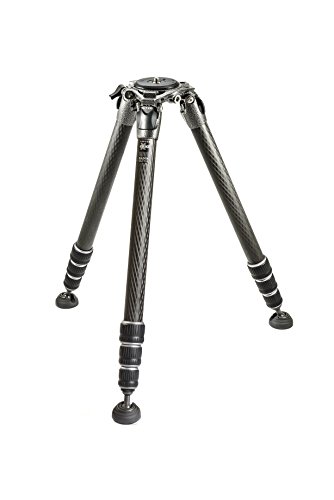 Best 3-series legs for lenses up to a 600mm prime · 3.9/5Gitzo GT3543LS Systematic Series 3
The short answer
- Weigh body, lens and head first: a 200-600mm zoom alone is about 2.1 kg and a 600mm f/4 prime about 3.3 kg, per the makers.
- Treat load ratings as a floor, not a stiffness score; size the legs by top tube diameter instead (a 3-series runs about 33-36 mm).
- Get your working height without a center column, and mount the lens by its collar foot on a head matched to its weight (gimbal from about 400mm).
- Decide how far you will carry it: stable, light and cheap rarely come together, so buy the bigger legs first if you can own only one tripod.
How to choose a tripod for a heavy telephoto lens comes down to the rig’s weight and the legs’ tube diameter, not the load rating alone. We run every long-lens setup through five checks:
- Weigh body, lens and head, and treat the load capacity as a floor.
- Pick legs by top tube diameter (a 3-series is about 33-36 mm).
- Reach your working height with no center column.
- Match the head to the lens and mount it by the tripod collar.
- Decide how far you will carry it.
Skipping them shows up in threads like one on Photography Stack Exchange, where a moon shooter with a 200-600mm zoom and a 2x teleconverter wrote, “I think my tripod head (Manfrotto X-PRO 3-Way) is introducing a lot of shaking at 600mm” (the thread).
Check 1 – Weigh what a tripod for a heavy telephoto lens must carry
A tripod for a heavy telephoto lens carries the body, lens and head together, so start from the maker’s lens weight and add the rest. The table lists three common lens classes with the head and legs we would start from.
| Lens class | Example and maker weight | Head we’d pair | Legs we’d start from |
|---|---|---|---|
| 100-500mm zoom | Canon RF100-500mm F4.5-7.1 L IS USM, 1,365 g without its tripod ring | Large ball head; gimbal for tracking | Strong 2-series, 3-series for long waits |
| 600mm zoom | Sony FE 200-600mm G OSS, 2,115 g | Gimbal | 3-series |
| 600mm f/4 prime | NIKKOR Z 600mm f/4 TC VR S, about 3,260 g | Full-size gimbal | 3-series or larger |
The top results agree on a margin: Ulanzi says two to three times the gear weight, and one Facebook group answer settles for 30% more. The rated load itself is the catch. In DPReview’s heavy-duty roundup, six tripods of near-identical size listed limits from 25 kg to 39 kg, footnoted “Manufacturer provided amount. Not a standardized measurement.” A rating says the legs will not collapse, not that they will stop vibration, which is also why not every tripod suits every camera.
From our notes: In DPReview’s spec table, the Gitzo GT3543LS carried one of the lowest load figures, 25 kg as printed there, yet the reviewer rated it a close second for vibration resistance. The RRS TVC-34, with the highest figure, also had the thickest top tubes. Since then we read long-lens spec sheets in this order: tube diameter and the missing column first, the load number last.
Check 2 – Size the long-lens tripod by top leg tube diameter
A long-lens tripod is only as stiff as its legs, and top leg tube diameter is the best single spec for stiffness. DPReview defines “3-series” as top tubes of 33-36mm, and the thickest in its roundup, 36.7mm on the RRS TVC-34, went with what DPReview called “maximum stability”. Smaller leg diameter has limits: a Fred Miranda owner of Series 3, 4 and 5 Systematics notes Gitzo recommends its 2-series Mountaineer for 200mm, up to 300mm lenses (the thread).

With the diameter settled, the rest is preference, as our Nikon Z8 tripod picks show:
- Sections: fewer, thicker sections are stiffer; four sections pack shorter.
- Material: carbon fiber is lighter and damps vibration better; aluminum costs less and weighs more (see our carbon fiber vs aluminum tripod comparison).
- Locks: a twist lock and a flip lock both hold a heavy lens; one bcgforums member dislikes twist locks, so handle both if you can.
Check 3 – Telephoto tripod height without a center column
A telephoto tripod should reach your working height with no column raised, because a raised center column is the weakest link under a heavy lens. SLR Lounge notes that every heavy-duty tripod it recommends has a platform base, since a column “will usually significantly reduce the stiffness” of the tripod (SLR Lounge).

Work out the number first: eye level minus the head and the camera above the lens foot. Our tripod height chart does the math by body height. Then add margin; one bcgforums member advises buying taller than you think for hillsides. A systematic tripod’s open apex also takes a leveling base or video bowl later, which speeds up leveling a gimbal on uneven ground.
Check 4 – Match the head and mount the lens by its tripod collar
A tripod for a heavy telephoto lens needs a head matched to the lens: a ball head for a 70-200mm, a bigger ball or pan-tilt around 300mm, and a gimbal head from about 400mm or whenever you track moving subjects. That map comes from the Ulanzi head guide. On a ball head, as one Stack Exchange answer puts it, “the center of gravity of the lens is above the rotation axes so the whole thing is unstable” (photo.stackexchange.com). A gimbal holds the lens on its balance point, so it stays where you leave it.

The tripod collar matters as much as the head; a superzoom without one, like the camera in our Nikon P1000 tripod picks, needs a long plate instead. An Arca-Swiss foot or long plate lets you slide the lens until it balances; our Arca-Swiss plate explainer covers the dovetail. For a 150-600mm zoom, see our gimbal head picks for 150-600mm lenses and the trade-offs of budget gimbal heads. The video above shows a wildlife photographer’s Gitzo Systematic with a full gimbal for supertelephoto lenses, next to the lighter ball-head kit he carries when the big lens stays home.
Check 5 – Carry weight of a tripod for a long lens
The right tripod for a long lens is the heaviest one you will actually carry, because stable, light and cheap rarely come together. DPReview opens its roundup with the saying “Cheap, light, stable – you can pick only two.” Legs that live beside the car at an airshow can be big and slow; legs that walk three miles to a blind have to strap to a pack (our Sony A7 IV tripod picks cover both).
Members of the bcgforums 600mm thread ask the same questions before naming a model: budget, the weight you will tolerate, whether it flies with you, and whether you need a head, since many better tripods are legs only. Tom Mason’s advice in the video above fits here: if you can buy one tripod, buy the bigger one first.
Telephoto tripod shake: problems owners hit and the fix
Most long-lens shake owners describe comes from the setup, so try these fixes before you replace the tripod.
- Shake at 600mm on a mid-range tripod. Stack Exchange answers to the moon shooter suggest short legs, firm ground (“Grass is not stable”), a wind block, a remote or self-timer, and mounting the collar foot. Our guides to tripod shake in wind and shake when pressing the shutter go step by step.
- The lens droops or tips forward on a ball head. Posters in r/AskPhotography point to a head that handles the torque (fluid or gimbal) or an aftermarket tripod foot that moves the weight off the ball.
- The ball head creeps after locking. Same cause: balance the lens over the head on a longer plate, or move to a gimbal.
- Twist when panning video. A Series 3 owner on bcgforums sees a little flex panning with the legs extended and lowers the tripod by a section.
One tripod for a heavy telephoto lens that passes all five checks
The Gitzo GT3543LS is the 3-series tripod DPReview’s roundup names, and a Gitzo Series 3 is what bcgforums members recommend for a 600mm lens. We feature it as the yardstick, not the only answer.
Gitzo GT3543LS Systematic Series 3 tripod: Best 3-series legs for lenses up to a 600mm prime
3.9Best Tripod Spec Score out of 5
- Stability9/10
- Portability (weight and folded length)7/10
- Working height7/10
- Build (materials, leg locks, head)9/10
- Value6/10
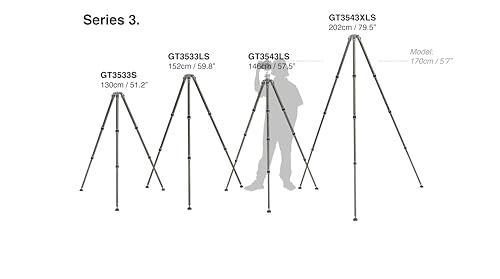
Stability 9: DPReview placed it a close second for vibration resistance among six 3-series tripods, though owners see twist when panning video fully extended. Portability 7: 2.03 kg and 57 cm folded. Height 7: 146 cm with no column, short of eye level for tall shooters. Build 9: Carbon eXact tubes and G-lock Ultra twist locks that keep out dirt; one buyer's leg-angle lever arrived broken. Value 6: premium-priced legs with no head included.
What owners and reviewers say from 5 reviews and posts we read
Praised for
- Rock solid in strong wind and on rough ground, with no vibration the owner could see
- Works well for photo use with a long lens; a 3-series owner calls it perfect for photo work
- Twist locks undo three at a time and keep grit out of the tubes
Common complaints
- Some flex or twist when panning video with the legs fully extended
- Spike feet and grease are no longer included, and one buyer's leg-angle lever arrived broken
Read on: Daniel Wretham Photography: Gitzo GT3543LS Tripod Review (owner) · Backcountry Gallery forums: Is a 3 series Gitzo systematic tripod a good choice for wildlife videography (owners) · Fred Miranda forums: Gitzo GT3541L + GH3781QR head or GT3543LS
Who it's for: Telephoto shooters with a 100-500mm, 200-600mm or 600mm-class lens on a gimbal who want 3-series stiffness that still straps to a pack. Caveat: it is legs only (budget for a head), and 146 cm without a column plus the head sits below eye level for tall shooters.
The Gitzo GT3543LS is a 4-section carbon fiber Systematic tripod from Gitzo, built around 32.9 mm top tubes and a flat 70 mm top with no column. It carries a 28 kg safety payload on Gitzo’s US page (DPReview printed 25 kg, the maker figure then). It weighs 2.03 kg, folds to 57 cm and reaches 146 cm, so most shooters need the head’s height to reach eye level. DPReview rated it a close second for vibration resistance among six 3-series tripods.
Landscape photographer Daniel Wretham, who owns one, calls it rock solid in high winds and likes the G-lock Ultra twist locks that keep grit out. The drawbacks: it is legs only, he missed the spike feet and grease earlier Gitzo kits included, a bcgforums buyer’s leg-angle lever arrived broken, and one owner sees flex when panning video fully extended. Pair it with a gimbal for a 200-600mm or 600mm f/4.
Choosing a tripod for a heavy telephoto lens: our verdict
A tripod for a heavy telephoto lens starts with thick-legged, column-free legs, then the head that balances your lens. For that moon shooter with the 200-600mm, firm ground, low legs, the lens on its foot and a remote release fix most of the shake now; 3-series legs with a gimbal fix the rest. If wildlife is the main use, our tripod for wildlife photography guide covers ground-level work and monopods next, and the tripod buying checklist lists every spec to compare.
Questions photographers ask
How much weight should a tripod hold for a telephoto lens?
Add up body, lens and head, then pick legs and a head rated well above that total. Ulanzi's head guide suggests two to three times the gear weight; a 200-600mm zoom alone weighs about 2.1 kg per Sony. Remember the rating is the maker's number, not a stiffness test.
Should you mount a telephoto lens by the camera or the collar?
By the collar foot. Mounting a long lens by the camera body leaves the rig front-heavy on the head and puts strain on the lens mount; the foot sits nearer the balance point and an Arca-Swiss foot lets you slide the lens until it balances.
Do you need a gimbal head for a telephoto lens?
Not for a 70-200mm, which a good ball head handles. Around 300mm a bigger ball or pan-tilt head works for static subjects, and from about 400mm, or whenever you track birds and sports, a gimbal holds the lens at its balance point so it stays where you leave it.
What leg diameter do I need for a 600mm lens?
A 3-series tripod, with top tubes around 33-36 mm, is the usual starting point for 600mm zooms and lighter 600mm primes. Long exposures with a heavy prime can call for larger legs or a second support under the lens.
Is a center column bad for a long lens?
Raised, yes: it puts the whole rig on one thin pole that flexes and prolongs vibration. Heavy-duty tripods for long lenses usually have a flat platform with no column or make the column an optional accessory.
Why you can trust this guide
- Products are checked against manufacturer specifications, user manuals and long-term owner reports.
- Each pick is scored on the Best Tripod Score: stability, portability (weight and folded length), working height, build quality and value. Scores come from published specs and owner reports, not hands-on testing.
- We never accept payment for placement. Affiliate commissions do not affect rankings.
Last reviewed . Read our research process and editorial policy, or report an error.
Sources
- Gitzo: Systematic Series 3 Long 4 Sections GT3543LSUS specifications
- DPReview: Roundup, Six Large Tripods For Heavy Duty Use
- SLR Lounge: Best Heavy Duty Tripod For Large Cameras and Lenses
- Ulanzi: Choosing the Right Tripod Head for Heavy Telephoto Lenses
- Canon USA: RF100-500mm F4.5-7.1 L IS USM specifications
- Sony: SEL200600G specifications
- Nikon: NIKKOR Z 600mm f/4 TC VR S specifications
- Photography Stack Exchange: Eliminating shake with a supertelephoto lens and tripod
- Photography Stack Exchange: Tripod heads for large telephoto lenses
- Backcountry Gallery forums: Best tripod to support the camera and 600 mm lens?
- r/AskPhotography: My camera lens is too heavy for tripod, what do I do?
Reviews and discussions we read

Best Tripod Editorial Team
Research & editorial
We research tripods, monopods and heads for photographers and video creators: real working height with and without the center column, load capacity against the gear you actually shoot, packed length for a carry-on, leg-lock speed and Arca-Swiss compatibility. Every guide follows our published research process and editorial policy.