In this guide (8 sections)
- Why photography equipment for tall people starts with posture
- Photography equipment for tall people, by the problem it solves
- A tripod with eye-level legs for tall photographers
- Flip screens and right-angle viewfinders for tall photographers
- How tall a monopod should be for a tall photographer
- Low-angle gear for tall photographers: stool and knee pad
- Which tall-photographer equipment to buy first
- Questions photographers ask
We earn a commission if you buy through links on this page, at no extra cost to you. It never changes what we recommend. How we make money.
The short answer
- The photography equipment for tall people that matters most is a tripod whose legs alone, column down, reach close to eye level.
- Add a flip-out screen or a right-angle viewfinder so you can look down instead of bending over the camera.
- A tall photographer's monopod needs about 70 to 72 inches; a mid-size tripod plus a camp stool or knee pad covers low angles.
- Stooping is not harmless: tilting the head 15 degrees raises the load on the neck from 10-12 lb to about 27 lb.
The photography equipment for tall people that does the most good is a tripod whose legs alone reach close to eye level, plus a flip-out screen or right-angle viewfinder so you can look down instead of bending. After those two, a monopod of about 70 inches and a stool or knee pad for low angles cover the rest.
When tall readers write to us, they rarely need more gear. They need gear sized to them, starting with the right tripod height for your body. So we built this guide around one question: where does each piece stop you from stooping?
Why photography equipment for tall people starts with posture
Stooping over a short tripod loads the neck: tilting the head forward 15 degrees raises the force on the cervical spine from 10-12 lb to about 27 pounds, per spine surgeon Kenneth Hansraj’s model. That study looked at phone posture. The angle is the same one we see in a tall photographer bent over a viewfinder.
The cause is plain arithmetic. An average tripod’s legs extend 50 to 63 inches, and the head and camera add only a few more. For someone over 6 feet, that viewfinder sits well below the eye. One 6 ft 4 in member on Photography Stack Exchange, posting as user50555, put it bluntly: “if I bend, kneel, hunch, etc, all day, I won’t be getting any shots at all because I’ll break!”
Photography equipment for tall people, by the problem it solves
Each stooping problem has one piece of equipment that fixes it, and one number that tells you whether it will. I would read the table below as a shopping order, top to bottom:
| Problem | Equipment | Number to check |
|---|---|---|
| Hunching at the viewfinder when standing | Tripod with tall legs | Legs-only height, column down |
| Bending to see the back of the camera | Flip-out screen or right-angle viewfinder | Screen tilt range |
| Monopod tops out at chest height | Long monopod | 70 to 72 in maximum |
| Kneeling on rocks for low angles | Knee pad or camp stool | Seat height vs your tripod’s mid height |
A tripod with eye-level legs for tall photographers
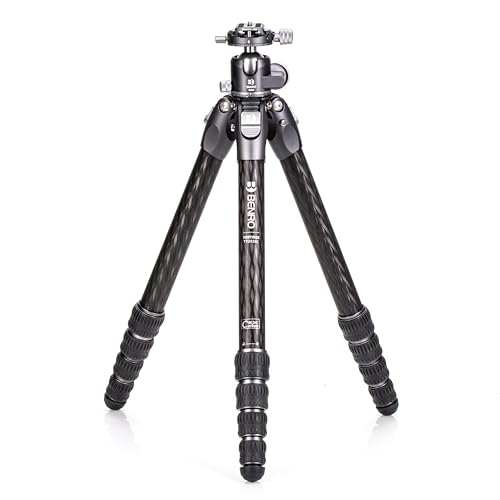
A tall photographer’s tripod should reach near eye level on its legs alone, with the center column down: roughly your height minus 10 to 12 inches. The column adds height, but Stack Exchange member Itai notes it “transmits more vibrations.” We treat it as the last few inches, not the plan.
Owners in that thread show what works. Eric, at 185 cm, bought a Benro tripod that stands 170 cm without the column. It sits slightly above his eye level, which helps when he points downhill. Mark J P, at 6 ft 6 in, says his Manfrotto 055XPROB reaches 187 cm without a head and easily meets his eye. For models that do this, see our best tripods for tall photographers over 6 feet.
From our notes: Mark J P’s 187 cm Manfrotto figure is what made us rethink this list. A 6 ft 6 in owner can be comfortable on a mainstream aluminum tripod, so the fix is not always an exotic giant tripod. What we took from the thread is that the legs-only height decides comfort, while the extras (screen, monopod, stool) handle the moments the tripod cannot.
Flip screens and right-angle viewfinders for tall photographers
A flip-out screen or a right-angle viewfinder lets a tall photographer look down at the camera instead of bending to it, which fixes stooping without a taller tripod. Stack Exchange member MikeW suggests either one, so you “just look down instead of bending over.”
If your camera already has an articulating screen, live view costs nothing. A right-angle viewfinder suits cameras with a fixed screen, or bright sun that washes the screen out. We would check that the screen tilts up far enough to read from standing height.
How tall a monopod should be for a tall photographer
A monopod for a tall photographer should reach about 70 to 72 inches, the range DPReview moderator Ellis Vener, at 6 ft 5 in, asked for in a thread on video and super-telephoto work. We would compare that figure with the monopod’s maximum height before the head goes on.
In the same thread, crowley213, at 1.86 m, owns a 192 cm Gitzo GM3550. With four of five sections out and a tilt head, it reaches his chin. MichaelFrederickPhoto, at 6 ft 4 in, found a 6-foot Benro carbon monopod with a small tri-foot base very sturdy. Our monopods with feet compare heights up to 71 in.
Low-angle gear for tall photographers: stool and knee pad
For low angles, a knee pad or a chair-height camp stool saves a tall photographer more strain than any tripod height.
- Knee pad: cabbey, at 6 ft 2 in, says his standard solution is to take a knee, and he has considered carrying a knee pad.
- Stool plus mid-size tripod: Dave, at 6 ft 6 in, pairs a mid-size tripod with a folding stool. He says the bundle weighs about the same as a tall tripod, with better stability.
Which tall-photographer equipment to buy first
Buy the tripod with eye-level legs first if you shoot standing, and the screen or stool first if most of your work is low.
- Mostly standing shots: a tall-legged tripod, then a long monopod.
- Fixed-screen camera: a right-angle viewfinder.
- Hiking or low angles: a mid-size tripod and a knee pad or stool.
If height is your main worry, our tall tripod vs regular tripod comparison sets out what the extra leg length costs.
Questions photographers ask
What photography equipment do tall people need most?
Tall people need a tripod whose legs reach near eye level with the center column down more than any other piece of photography equipment. After that, a flip-out screen or right-angle viewfinder, a monopod of about 70 inches and a knee pad or stool for low angles remove most stooping.
How tall should a monopod be for a tall person?
A monopod for a tall person should reach about 70 to 72 inches, the range a 6 ft 5 in DPReview moderator asked for. A 1.86 m photographer in that thread reaches chin height with four of five sections of a 192 cm monopod plus a tilt head.
Is a right-angle viewfinder or a flip screen better for tall photographers?
A flip screen is the simpler choice for tall photographers because it works for stills and video with no extra part, while a right-angle viewfinder suits cameras with a fixed screen or bright light. Both let you look down at the camera instead of bending to it.
Should tall photographers raise the center column?
Tall photographers should raise the center column only for the last few inches, after the legs are fully set. A raised column transmits more vibration, as one Stack Exchange answer notes, so legs-first height is steadier for long exposures and long lenses.
Can a tall photographer use a regular tripod?
A tall photographer can use a regular tripod for low and mid-height work, and one 6 ft 6 in Stack Exchange member pairs a mid-size tripod with a chair-height stool. For standing shots, regular legs that stop at 50 to 63 inches leave the viewfinder below eye level.
Why you can trust this guide
- Products are checked against manufacturer specifications, user manuals and long-term owner reports.
- Each pick is scored on the Best Tripod Score: stability, portability (weight and folded length), working height, build quality and value. Scores come from published specs and owner reports, not hands-on testing.
- We never accept payment for placement. Affiliate commissions do not affect rankings.
Last reviewed . Read our research process and editorial policy, or report an error.
Sources
- NPR: text neck and the load on the cervical spine (Hansraj study)
- Breathing Color: how to buy the right tripod (average leg height)
- Photography Stack Exchange: what can tall photographers do about tripod height?
- DPReview forums: recommendations for a monopod for a tall person
- Reddit r/photography: tall photographers

Best Tripod Editorial Team
Research & editorial
We research tripods, monopods and heads for photographers and video creators: real working height with and without the center column, load capacity against the gear you actually shoot, packed length for a carry-on, leg-lock speed and Arca-Swiss compatibility. Every guide follows our published research process and editorial policy.